A forklift does not need to be moving fast to cause a serious incident. In most warehouses, the real problem is not dramatic recklessness. It is routine behavior that slowly becomes accepted – tight turns near pedestrians, blocked sightlines, rushed loading, and operators using habits that were never properly corrected. That is why forklift safety training for warehouses cannot be treated as a one-time onboarding task. It has to function as part of daily operational control.
Warehouse leaders already understand the stakes. A forklift incident can injure workers, damage racking, disrupt inventory flow, and create unplanned downtime that spreads across an entire shift. Training matters because forklifts operate at the intersection of people, vehicles, goods, and fixed infrastructure. When those interactions are not managed well, even experienced teams are exposed.
Why forklift safety training for warehouses often falls short
Many warehouse training programs cover the basics but do not change behavior on the floor. Operators may attend classroom sessions, complete a checklist, and return to the same congested aisles, unclear traffic routes, and inconsistent supervision. The result is predictable: training exists on paper, but risk remains in operation.
The gap usually comes from treating training as information transfer rather than operational risk reduction. Knowing the rules is not the same as applying them under pressure. An operator may understand load limits yet still travel with an unstable load because pick rates are being pushed. A pedestrian may know designated walkways but still cross a forklift lane when staging areas are poorly arranged. In practice, safety performance depends on training, layout, supervision, and engineering controls working together.
This is where warehouse managers and EHS teams need a more practical standard. Good training should reflect actual site conditions, including aisle widths, racking configurations, loading zones, blind corners, battery charging areas, and pedestrian traffic patterns. If the training environment looks nothing like the real operation, retention drops and unsafe shortcuts return quickly.
What effective forklift safety training should cover
The strongest programs focus on how forklifts create risk in normal operations, not just in obvious high-risk moments. Operators need to understand vehicle stability, braking distance, turning radius, load handling, visibility limits, and the impact of floor conditions. Just as important, they need to recognize how speed, fatigue, distraction, and route congestion increase risk even when a truck is being operated by a competent driver.
Pedestrian interaction deserves equal attention. In many facilities, forklift incidents happen not because the operator lacks technical skill, but because communication between driver and pedestrian fails at the wrong moment. Training should address horn use, right-of-way rules, eye contact limitations, crossing behavior, and how to approach intersections and blind spots. This is especially important in mixed-use warehouse environments where order pickers, supervisors, maintenance staff, and visitors may move through active traffic zones.
Pre-use inspections are another area where training often becomes too routine. Operators should know what to check, but they should also understand why it matters. Tire condition, fork integrity, mast operation, brakes, steering response, warning lights, and audible alerts all affect control and visibility. When inspections are treated as a quick administrative step, defects are more likely to be missed until they contribute to an incident or equipment damage.
Load handling also needs more than a generic reminder to be careful. Operators should be trained on load centering, stability under elevation, uneven pallet conditions, damaged pallets, shrink-wrapped loads that shift in motion, and the risks of traveling with elevated forks. Warehouses with different product profiles may need different emphasis. A consumer goods facility with fast-moving pallet turnover has different handling pressures than an industrial warehouse storing heavier or less stable materials.
Training should reflect the warehouse, not just the truck
One common mistake is delivering standardized forklift instruction without adapting it to local hazards. A warehouse with narrow aisles, frequent cross-traffic, and loading bay congestion needs scenario-based training that reflects those conditions. A facility with outdoor-to-indoor transitions may need extra focus on floor traction, ramp use, and changing visibility.
That means site-specific hazard mapping should influence training content. Near misses, collision history, rack impact data, and pedestrian conflict points can all reveal where operator behavior needs reinforcement. The most useful training programs are shaped by evidence from the site itself.
Classroom instruction is not enough
A warehouse can have well-written procedures and still experience repeated unsafe behavior. The reason is simple: forklift operation is physical, visual, and situational. Operators must judge spacing, speed, load balance, line of sight, and traffic movement in real time. That cannot be fully taught in a classroom.
Practical evaluation on the warehouse floor is essential. Operators should demonstrate safe travel, parking, stacking, turning, reversing, and load placement under normal working conditions. Supervisors should be able to identify where technique breaks down, especially during busy periods when rushing is most likely.
Refresher training is just as important. It should not be limited to post-incident response. Changes in layout, throughput demands, shift patterns, or equipment type can all justify retraining. So can patterns of minor rack contact, repeated near misses, or visible deterioration in operator habits. Waiting for a serious event before intervening is an expensive approach to safety.
The role of supervisors in forklift safety performance
Training programs succeed or fail through supervision. If supervisors tolerate speeding, unsafe parking, corner cutting, or informal pedestrian crossings, the training message loses credibility immediately. Operators take their standards from what is enforced on the floor, not only from what is presented during training sessions.
Supervisors need to know what safe forklift behavior looks like and how to correct unsafe actions consistently. That includes coaching, observation, and documentation, but it also requires practical authority. If production pressure always overrides safe movement rules, operators will respond to the real priority.
There is also a trade-off to manage. Overly rigid enforcement without considering workflow realities can create resistance and workarounds. The better approach is to combine clear standards with operational problem-solving. If operators are cutting corners to meet targets, the root issue may be route design, staging space, or scheduling pressure rather than attitude alone.
Safety technology can strengthen training outcomes
Training remains foundational, but it is more effective when supported by engineered controls. Warehouses are dynamic environments, and people do not perform perfectly every time. Safety systems help reduce dependence on flawless behavior alone.
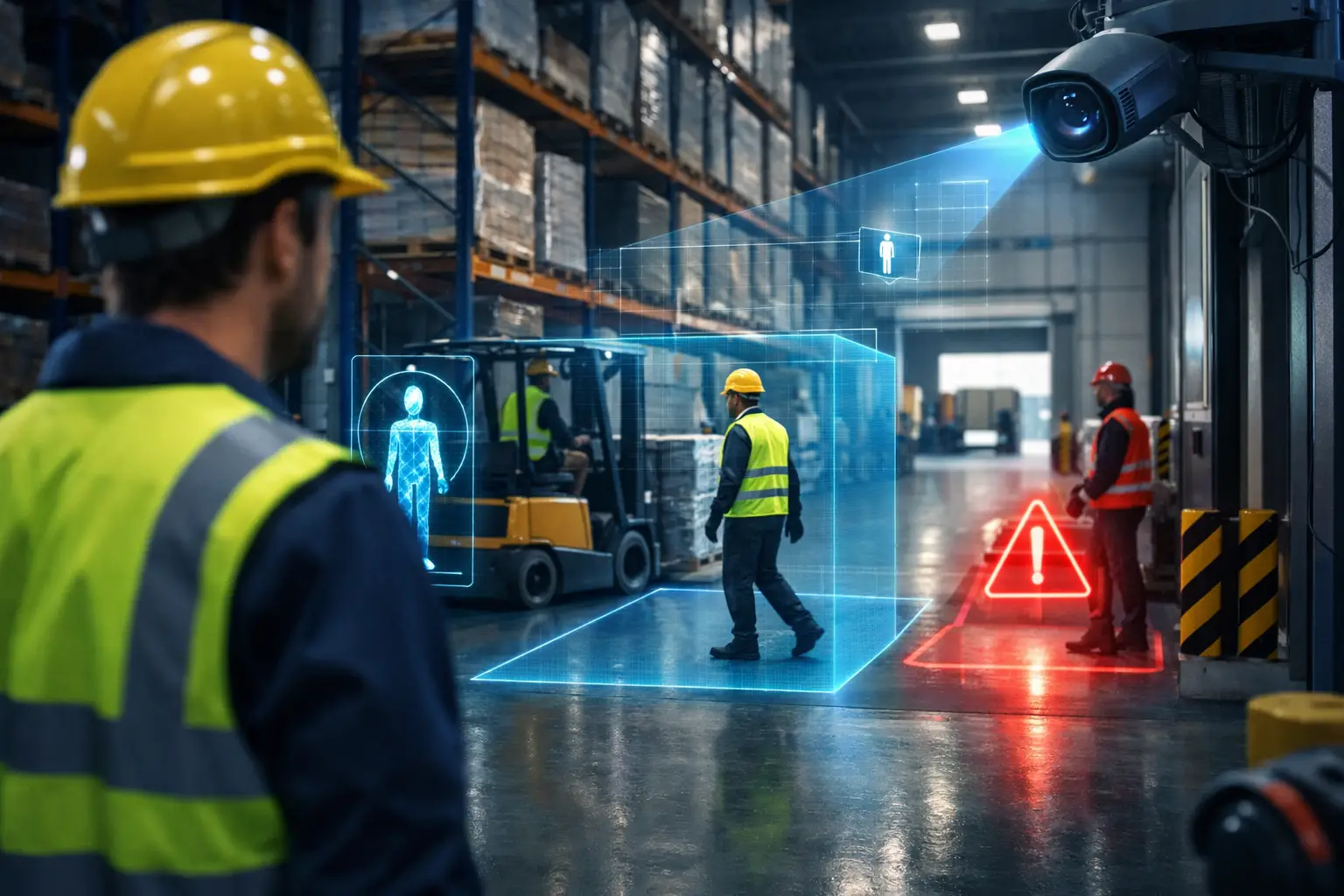
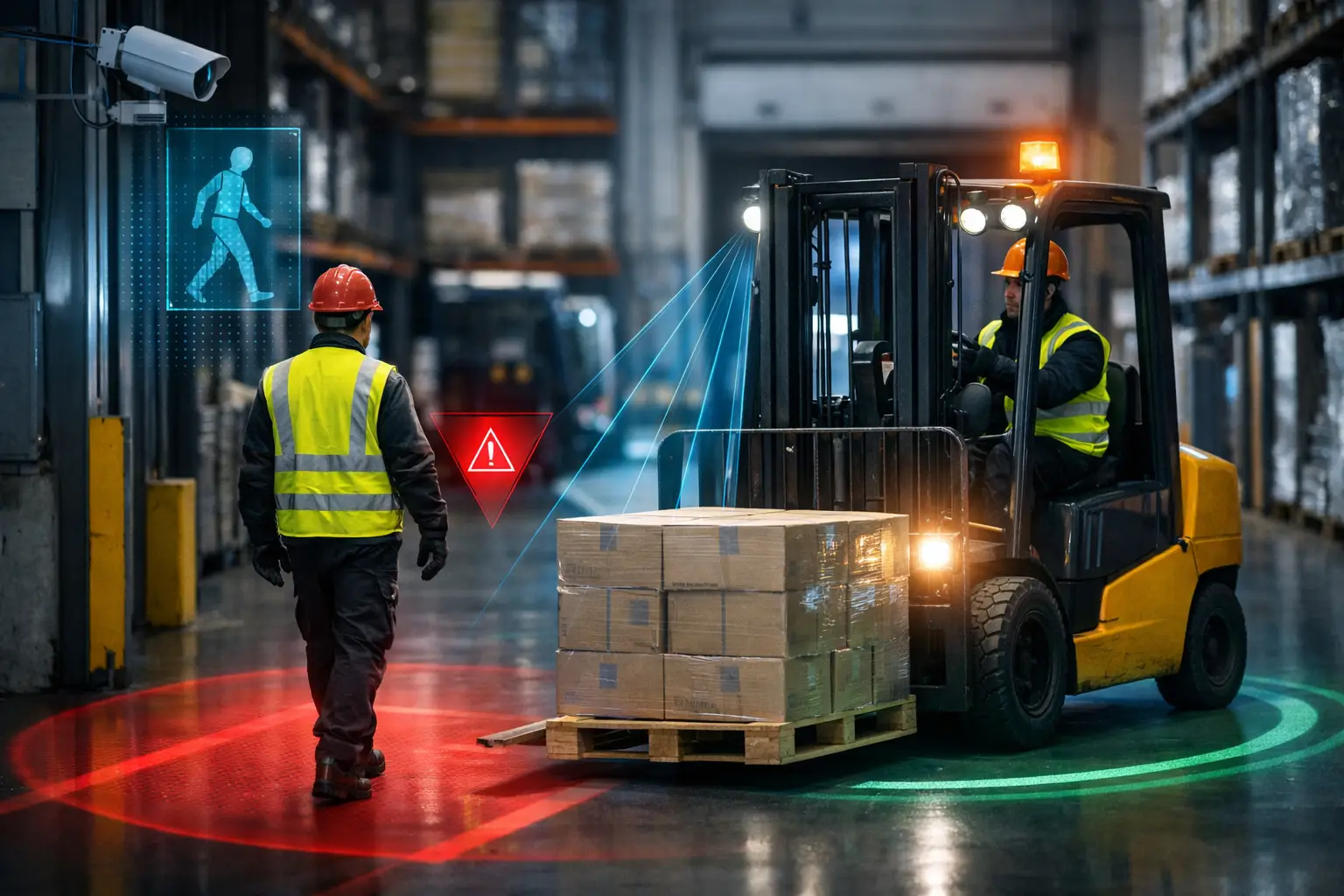
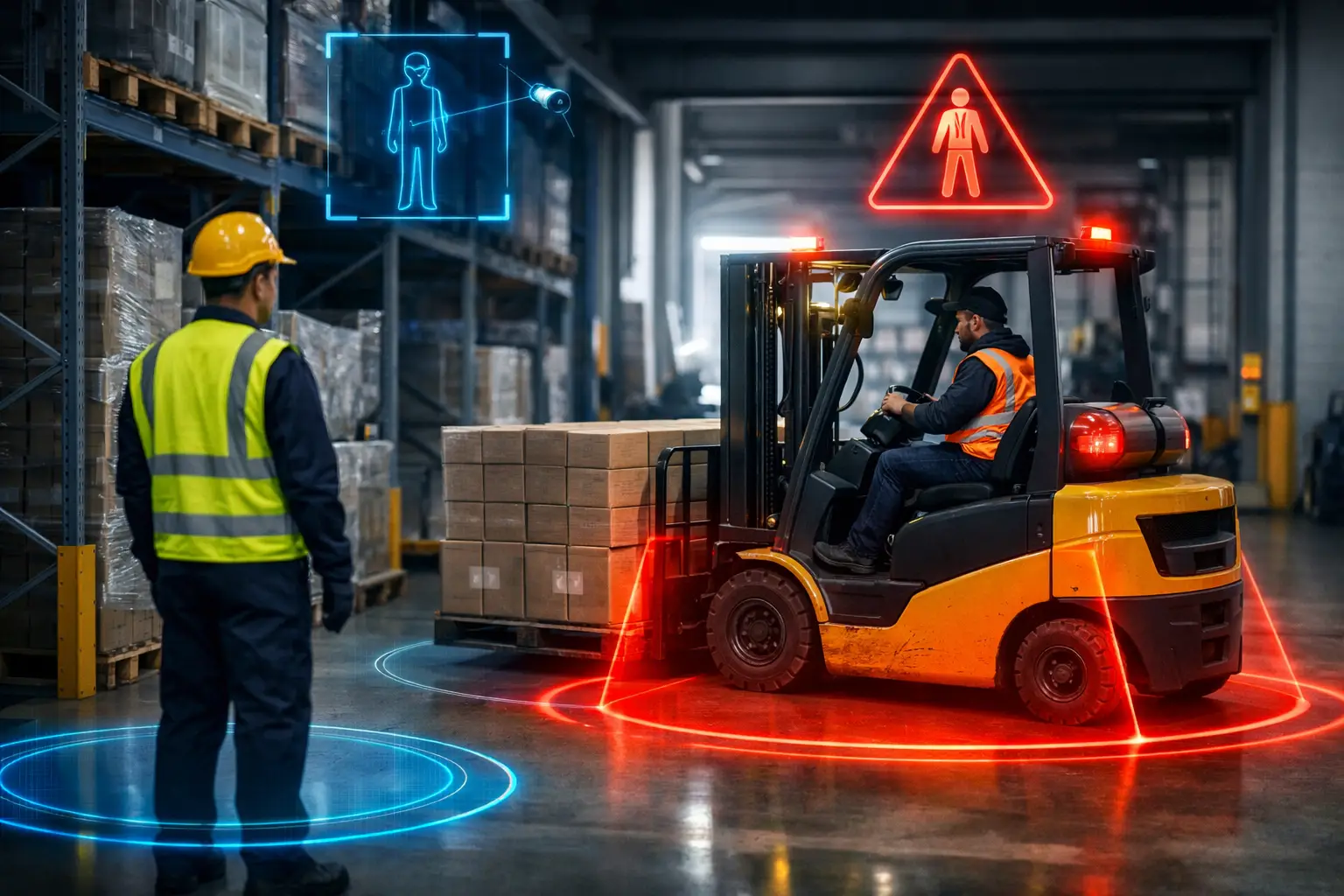
For example, audible and visual warning systems can improve awareness at intersections and high-risk travel paths. Proximity warning systems can help identify dangerous interaction zones between forklifts and pedestrians. Safety floor projection can reinforce exclusion areas and crossing points in locations where traffic patterns are complex or visibility is limited. In facilities with persistent risk hotspots, Vision AI safety monitoring can also provide objective insight into unsafe movement patterns, allowing managers to refine training around real behaviors rather than assumptions.
These technologies do not replace operator competence. They support it. The value comes from creating layers of protection – training, supervision, traffic control, and safety systems working together. That approach is usually more reliable than expecting training alone to control risk in a busy warehouse.
How to measure whether training is actually working
Completion records are not enough. A training program should be judged by operational indicators. If forklift safety training is effective, a warehouse should see fewer near misses, less rack and door damage, better compliance with traffic routes, stronger pre-use inspection discipline, and more consistent pedestrian behavior in shared areas.
Observation data matters here. Short, structured floor audits often reveal more than formal testing. Are operators slowing at intersections? Are loads being carried at safe height? Are pedestrians using designated paths? Are damaged pallets being reported or simply moved along? These are direct signs of whether training has become a working standard.
Incident review should also be used carefully. The goal is not only to identify operator error. It is to understand the operating conditions around that error. A collision may point to poor visibility, congested staging, weak segregation, or inadequate warnings as much as it points to a training need. Better analysis leads to better prevention.
Building a training program that lasts
The most effective warehouse safety programs treat forklift training as an ongoing system, not an annual event. That system includes operator onboarding, site-specific practical assessment, supervisor observation, periodic refreshers, and engineering controls that reduce exposure where human error is most likely.
For organizations managing multiple facilities, consistency matters, but so does flexibility. Core rules should remain stable across sites, while local risk conditions shape examples, coaching priorities, and control measures. That balance helps standardize expectations without ignoring operational differences.
Every worker deserves to return home safely every day. In warehouse operations, that depends in part on whether forklift training is realistic, enforced, and supported by the right environment. When training is built around actual risks instead of paperwork, it does more than satisfy a requirement. It protects people, equipment, and the continuity of the operation.