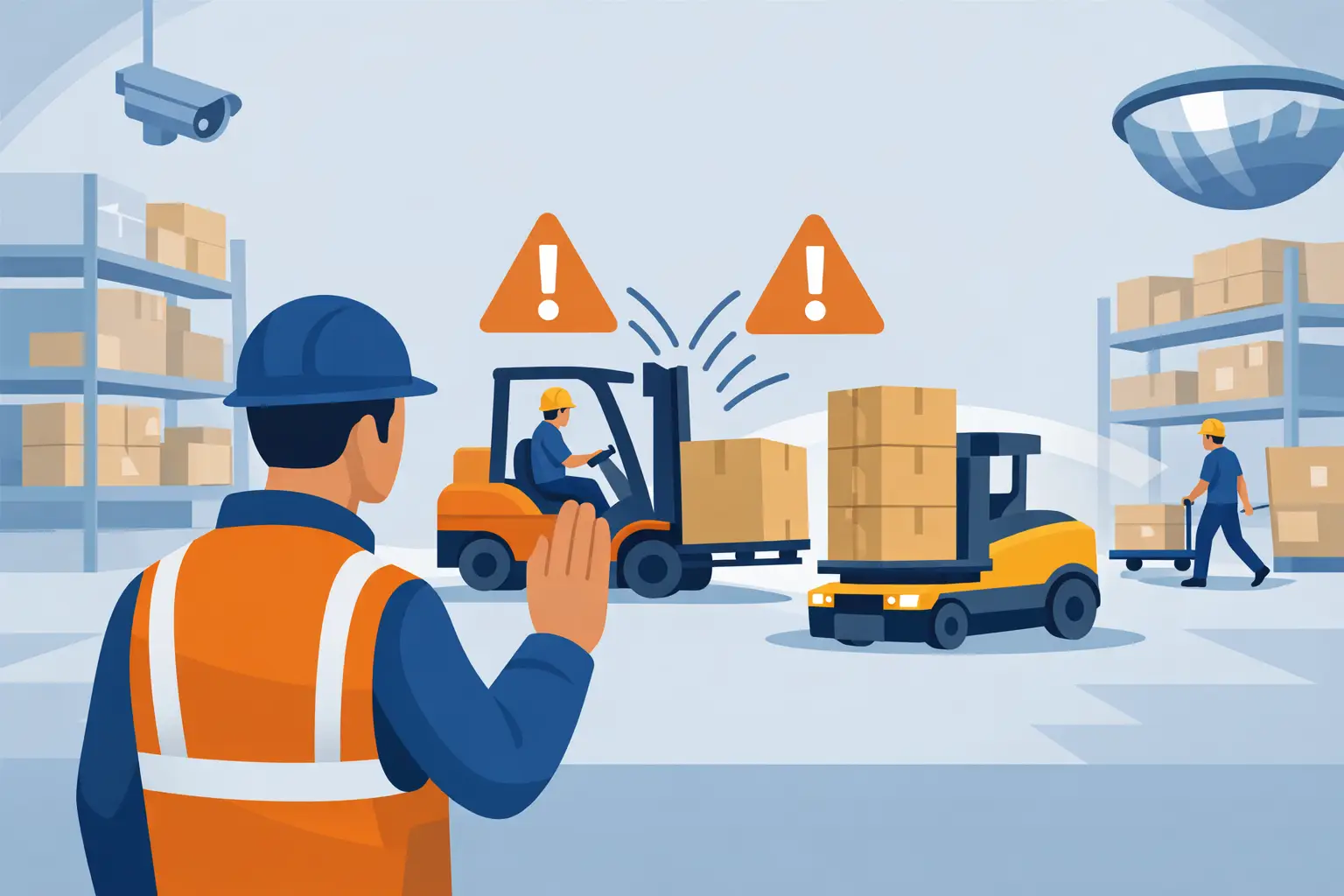
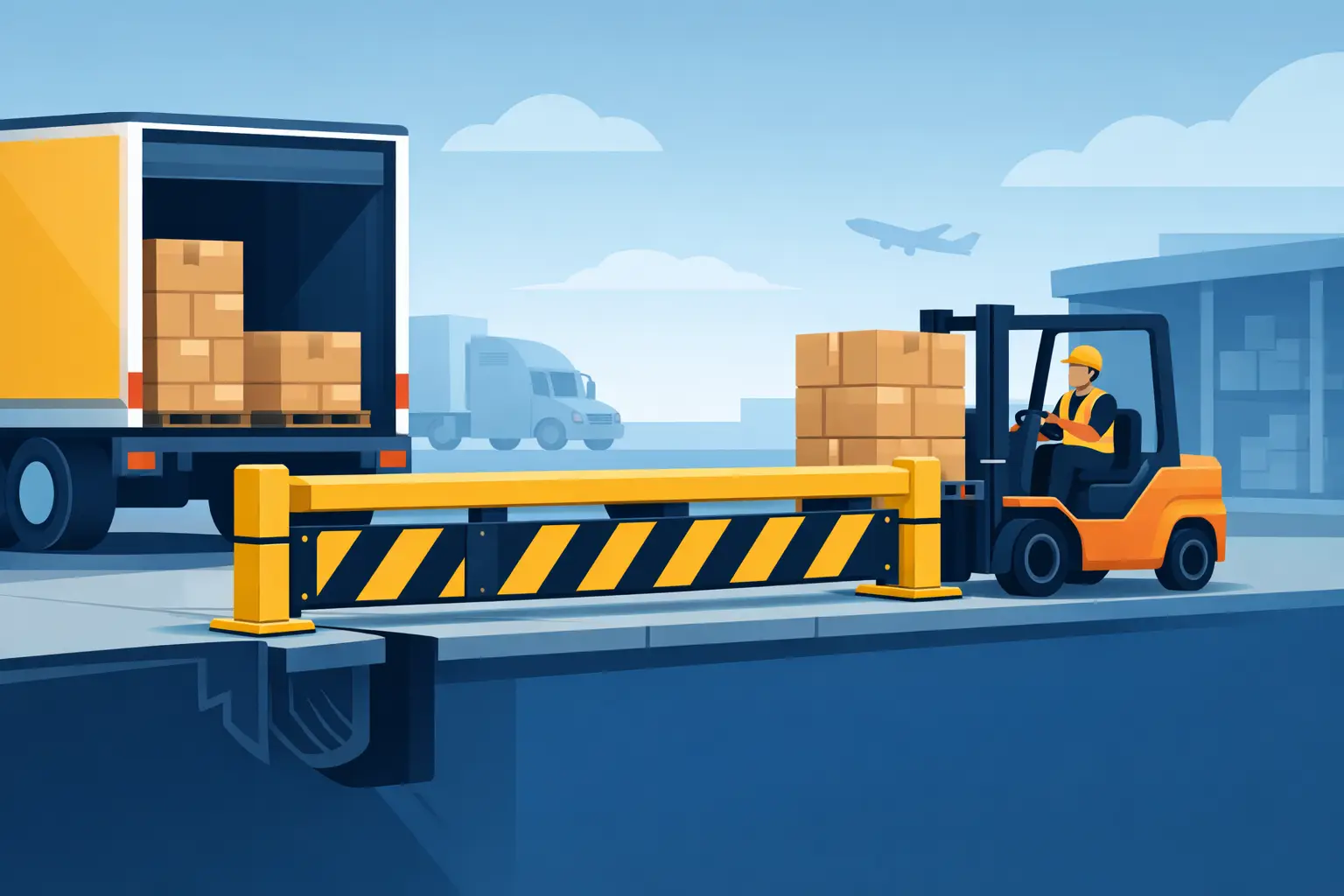
A loading dock can go from routine to high-risk in seconds. One open dock door, one misjudged forklift approach, or one trailer that shifts unexpectedly can lead to injury, product loss, equipment damage, and operational disruption. That is why loading dock safety barriers are not just a facility upgrade. They are a frontline control for protecting people and keeping shipping operations stable.
In fast-moving warehouses, distribution centers, and manufacturing plants, the dock is where pedestrians, forklifts, trucks, and schedules all converge. It is also where risk becomes normalized. Teams get used to open edges, temporary workarounds, and traffic moving close to drop-offs. The problem is not usually a lack of awareness. It is the absence of consistent physical protection that works with the operation instead of against it.
Why loading dock safety barriers matter
Most dock incidents do not come from a single dramatic failure. They come from ordinary moments. A worker steps backward while checking a load. A forklift approaches a door before a trailer is secured. A dock opening remains exposed during a shift change. When the edge is open, the margin for error disappears.
Loading dock safety barriers create a controlled boundary where the fall hazard exists. That sounds simple, but the impact is broad. A properly selected system can reduce fall exposure, discourage unsafe shortcuts, protect equipment from edge impact, and reinforce traffic discipline at one of the busiest points in the building.
For EHS leaders, that means a stronger layer of prevention. For operations teams, it means fewer interruptions, fewer damage events, and less dependence on procedures alone. Administrative controls matter, but physical barriers are what still stand in place when people are distracted, rushed, or covering multiple tasks at once.
The risks barriers are actually solving
Open loading docks present more than one hazard, and that is where many buying decisions go wrong. Some facilities only think about fall protection. Others only focus on vehicle impact. In practice, the dock needs to manage both.
The first risk is pedestrian falls from exposed dock edges. This is the most obvious hazard, especially when dock doors remain open without a trailer present. The second is forklift or pallet jack overrun, which can happen during staging, repositioning, or poor visibility conditions. The third is impact to the building structure itself, including dock frames, doors, and nearby assets. Then there is the less visible cost – disrupted workflow after an incident, investigation time, equipment repair, and avoidable downtime.
A barrier system should be evaluated against all of these conditions, not just the one that triggered the initial concern. If a facility runs heavy forklift traffic, the barrier must withstand more than incidental contact. If the dock is used for staging or inspection, the opening and closing method matters because workers will interact with it constantly. Safety only works when the control fits the real pattern of use.
What makes a barrier effective in a real facility
Not all dock barriers deliver the same level of protection. Some are designed mainly for visual control. Others are engineered to resist heavy industrial impact. The difference matters.
An effective system starts with physical performance. It should be rated for the kind of force it may encounter, whether that comes from a loaded forklift, powered pallet truck, or repeated contact over time. If a barrier looks strong but has not been selected for the facility’s vehicle profile, it may create false confidence.
Visibility is just as important. Dock areas are noisy, fast, and often congested. Workers need to recognize the protected edge immediately. High-visibility finishes, clear geometry, and predictable operation all help reduce hesitation and mistakes.
Ease of use also deserves more attention than it usually gets. If a barrier is awkward to open, slow to reset, or difficult to integrate with loading activity, teams will look for ways around it. That is not a worker problem. It is a design problem. The best systems are strong enough for industrial use and simple enough to support compliance during busy shifts.
Durability affects long-term value as well. Docks are punishing environments. Exposure to impact, dust, weather, and constant operation can shorten the life of underbuilt products. A barrier that requires frequent repair becomes a maintenance issue instead of a safety solution.
Choosing the right loading dock safety barriers
The right choice depends on how the dock is used, who uses it, and what level of vehicle exposure exists. There is no single barrier type that fits every facility.
For pedestrian fall protection
If the primary issue is preventing workers from stepping or falling through an open dock door, a gate-style or cross-barrier solution may be appropriate. These systems help secure the opening when no trailer is present and create a clear physical stop at the edge.
This works well in facilities where foot traffic is common near dock openings and vehicle interaction at the barrier itself is limited. The trade-off is that lighter systems may not provide meaningful forklift impact resistance. They solve one hazard well, but not all hazards equally.
For forklift exposure near dock edges
Where forklifts operate aggressively around staging lanes or door positions, the barrier needs a higher level of structural protection. In these environments, the system should be engineered for repeated industrial contact and designed to maintain its protective function after impact.
This is where many low-cost options fall short. They may appear suitable during installation but perform poorly under real operating conditions. If the cost of one edge incident includes injury, dock repair, shipment delay, and lost productivity, the lowest purchase price is rarely the lowest operating cost.
For high-throughput dock operations
Some facilities open and close dock positions constantly across multiple shifts. In that case, barrier speed and ergonomics become central. A strong barrier that slows trailer turnover or creates friction during loading can affect throughput, especially in time-sensitive environments.
The better approach is to assess barrier design alongside dock workflow. Can workers operate it quickly and correctly? Does it interfere with staging, securing, or inspection tasks? Can it be standardized across multiple doors? Those details influence adoption more than spec sheets alone.
Installation is only part of the solution
A barrier performs best when it is part of a wider dock safety strategy. That includes traffic assessment, clear operating zones, dock equipment compatibility, signage, and worker training. Physical protection is critical, but it should not be installed in isolation.
For example, a barrier may reduce edge fall risk, but visibility issues from blind forklift approaches may still exist. A dock may be protected at the opening, but poor trailer restraint practices could leave teams exposed during loading. Effective risk reduction comes from addressing the sequence of hazards, not checking a single box.
This is where a consultative approach matters. Facilities benefit from looking at the dock as a system rather than a product location. Engineering input, installation quality, and ongoing support all affect whether the barrier continues to perform as intended over time. For organizations managing multiple sites or planning safety improvements in phases, consistency across locations can also make training and maintenance more reliable.
The business case is stronger than many teams expect
Safety investments are sometimes treated as difficult to quantify until an incident happens. At the loading dock, the cost exposure is usually more visible than it first appears.
One serious event can involve medical costs, workers’ compensation, damaged inventory, structural repair, equipment downtime, delayed outbound loads, and internal investigation resources. There is also the human cost, which no facility should accept as a routine operating risk. Every worker deserves to return home safely every day.
That is why loading dock safety barriers should be viewed as both a protective control and an operational stability measure. They help prevent injuries, but they also reduce disruption at one of the most critical transfer points in the facility. For operations leaders and procurement teams, that makes the discussion less about adding hardware and more about reducing avoidable risk in a measurable way.
Organizations that take dock safety seriously tend to make better decisions earlier. They assess actual traffic patterns, choose barriers based on real impact conditions, and work with partners who understand installation, integration, and long-term service. That practical discipline is what turns safety from a reactive expense into a durable operational advantage.
If your dock edge is still protected mainly by procedure, paint, or habit, that is a gap worth addressing now. The right barrier does more than block an opening. It creates a safer decision point every time work moves through the dock.