A small wisp above a charging station or a faint haze near a conveyor line can be easy to miss until it becomes a shutdown, an evacuation, or a fire loss. That is where an ai smoke detection camera changes the equation. Instead of waiting for smoke to reach a point detector, it watches the area continuously and flags visual signs of smoke at the source, often much earlier in open industrial spaces.
For warehouse, manufacturing, and logistics operators, the appeal is straightforward. Early detection protects people first, but it also protects uptime, inventory, infrastructure, and customer commitments. When a fire risk develops in a large facility, minutes matter. In some environments, seconds do.
What an AI smoke detection camera actually does
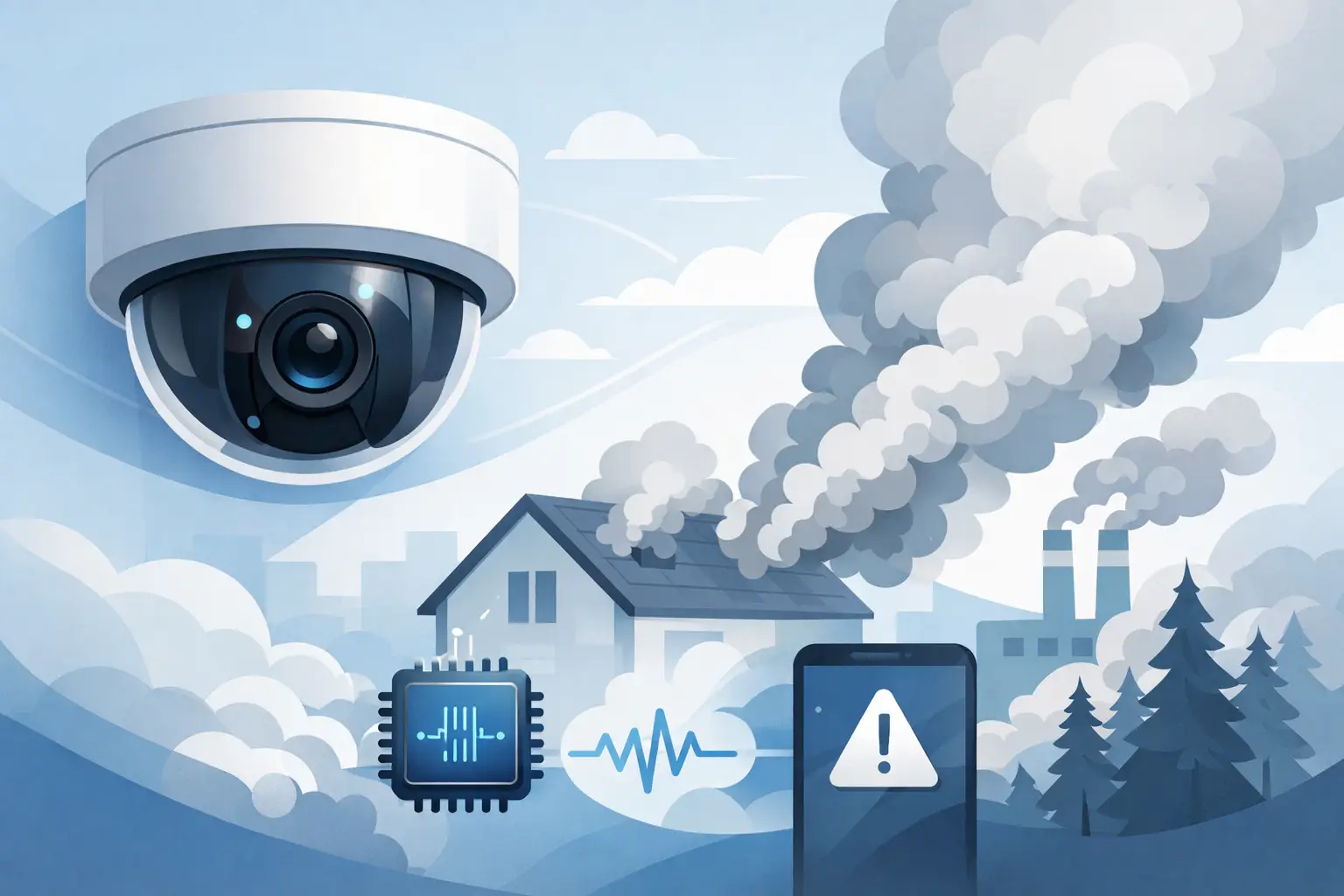
An ai smoke detection camera uses video analytics to identify smoke-like patterns in a camera feed. The system is trained to recognize visual characteristics such as movement, spread, opacity, and behavior over time. Rather than measuring heat or particles at a single point, it observes a wider field of view and looks for evidence that smoke is forming within that scene.
That distinction matters in industrial settings. Traditional smoke detectors remain essential, but they can be limited by ceiling height, airflow, dust conditions, or the sheer size of the protected area. A camera-based system adds another layer of awareness, especially in large-volume spaces where smoke may take longer to reach conventional devices.
The best systems do more than trigger a generic alarm. They can define detection zones, classify events, send alerts to control rooms or mobile devices, and provide visual verification so teams can respond faster and with more confidence. For operations leaders, that means less guesswork during the first critical moments of an incident.
Where AI smoke detection cameras make the most sense
Not every facility has the same fire profile, and not every area benefits equally from video-based detection. The strongest use cases tend to be places where early visual detection fills a gap.
High-ceiling warehouses are a common example. Smoke can stratify or disperse before it reaches fixed ceiling detectors, particularly where ventilation and air movement are significant. An AI smoke detection camera can monitor long aisles, staging zones, and open storage areas from a practical vantage point.
Battery charging and storage areas are another priority. With forklifts, lithium-ion systems, and electrical charging infrastructure, early signs of smoke can appear locally before heat builds enough to trigger other systems. In these environments, visual confirmation is especially useful because teams need to know whether the event is real and where it started.
Outdoor or semi-covered industrial zones can also benefit, though with caveats. Loading bays, waste handling areas, yard operations, and external equipment zones may not suit conventional indoor smoke detection methods. A camera system can extend visibility into these spaces, but performance depends heavily on camera placement, lighting, weather exposure, and scene stability.
Why industrial teams are looking at this technology now
The interest is not just about adopting AI for its own sake. It is about closing detection gaps in facilities that have become larger, faster, and more complex.
Warehouses now carry higher inventory density. Material handling equipment moves continuously. Battery systems are more common. Operations run longer hours with tighter staffing. At the same time, safety leaders are expected to reduce incidents without creating friction that slows production.
That is why visual intelligence is gaining traction. It supports a more proactive safety posture. Instead of relying on a single detection method, facilities can combine camera-based analytics with alarms, suppression systems, and operating procedures. The result is a layered approach that improves resilience.
There is also a practical management benefit. Video-based alerts give supervisors and EHS teams context. If an alert includes a live image or event clip, teams can verify conditions quickly, escalate correctly, and avoid losing time searching a large area for the source.
The strengths and limits of an AI smoke detection camera
The strength of an ai smoke detection camera is coverage. One properly positioned device can monitor a broad area, which can be valuable in spaces where installing dense networks of detectors is difficult or costly. It also helps with early visibility in line-of-sight applications.
Another advantage is response quality. Visual confirmation can improve decision-making during the first moments of an event. Security, operations, and safety teams can coordinate from the same visual information instead of responding only to an alarm point.
But there are trade-offs. Camera-based smoke detection depends on visibility. Poor lighting, glare, steam, dust, fog, or obstructed views can affect performance. A system may also need careful tuning to reduce nuisance alerts caused by exhaust, lighting changes, or process-related emissions.
That is why this technology should not be treated as a universal replacement for conventional fire detection. In most industrial facilities, it works best as part of an integrated safety strategy. The right question is not whether AI replaces standard detectors. It is where AI adds earlier awareness, broader coverage, or better verification.
What to assess before deployment
If you are evaluating AI smoke detection cameras, the first step is not the camera specification sheet. It is the risk profile of the space.
Start with the fire scenarios that concern you most. Are you trying to detect smoke in high-bay racking, over electrical equipment, near battery charging, inside a production hall, or at a loading bay? The answer affects camera location, lens choice, analytic settings, and integration requirements.
Next, review the environment. Lighting conditions across shifts matter. So do reflections, dust levels, airflow, humidity, and whether the scene changes constantly due to vehicle traffic or moving equipment. An analytic that performs well in a stable indoor space may require different configuration in a busy industrial zone.
Then consider response workflow. Who receives the alert, and what happens next? A good detection event only creates value if the facility has a defined escalation path. That may include local sirens, beacon alerts, notifications to supervisors, a control room review, or automated actions tied to broader safety systems.
Integration is another major factor. Industrial buyers should look beyond detection accuracy and ask how the system fits with their existing CCTV network, alarm infrastructure, facility management practices, and maintenance processes. A solution that is technically advanced but operationally isolated will be harder to sustain.
Finally, think about support. Industrial safety systems are not plug-and-forget assets. Commissioning, testing, environmental tuning, staff training, and periodic maintenance all affect long-term performance. This is where an engineering-led implementation partner matters. A consultative approach helps ensure the system is designed around real hazards, not just device capability.
AI smoke detection camera deployment is an engineering decision
Too many safety technologies are evaluated as products when they should be evaluated as operational controls. An ai smoke detection camera is a clear example. The question is not simply which model to buy. The question is how to design reliable visual detection for a specific industrial risk.
That includes field of view studies, blind spot analysis, alarm logic, environmental testing, and coordination with fire safety requirements. It may also include combining smoke analytics with thermal imaging or other video intelligence where the risk justifies it.
For industrial operators, that discipline reduces false confidence. A camera mounted too high, aimed into glare, or left untuned in a dusty process area may look like coverage on paper while underperforming in practice. Proper engineering closes that gap.
This is also why many organizations prefer a solution partner rather than a hardware supplier. In facilities where worker safety, facility resilience, and business continuity are tied together, implementation quality is part of the protection system. SysGuard’s approach to industrial safety reflects that reality by aligning technology selection with site risk, operational flow, and long-term support.
What success looks like in the real world
A successful deployment is not just an installed camera with AI enabled. It is a system that detects credible smoke events early, gives teams enough visual context to act, and fits naturally into site operations.
In practice, that means low nuisance alerts, clear accountability for response, and dependable performance across day and night conditions. It means the technology supports the people responsible for safety instead of creating extra noise for them to manage.
Most of all, it means treating detection as prevention support rather than waiting for loss. Every worker deserves to return home safely every day, and every facility deserves safety systems built for the realities of industrial operations. If your site has open spaces, elevated fire risk zones, or areas where early visual warning could prevent escalation, this is a technology worth assessing with care.