A forklift clipping a rack end frame is easy to dismiss as a minor incident – until the upright twists, inventory becomes unstable, and an avoidable impact turns into downtime, repair cost, and real risk to people nearby. That is why warehouse barrier protection systems matter. In busy facilities, they are not cosmetic add-ons. They are a frontline control that protects workers, infrastructure, and operational continuity.
For warehouse managers and EHS leaders, the question is rarely whether protection is needed. The real question is where barriers will make the biggest difference, what type will hold up under daily traffic, and how to install them without creating new bottlenecks. Good decisions here come from looking at risk in operational terms, not just product specs.
What warehouse barrier protection systems actually do
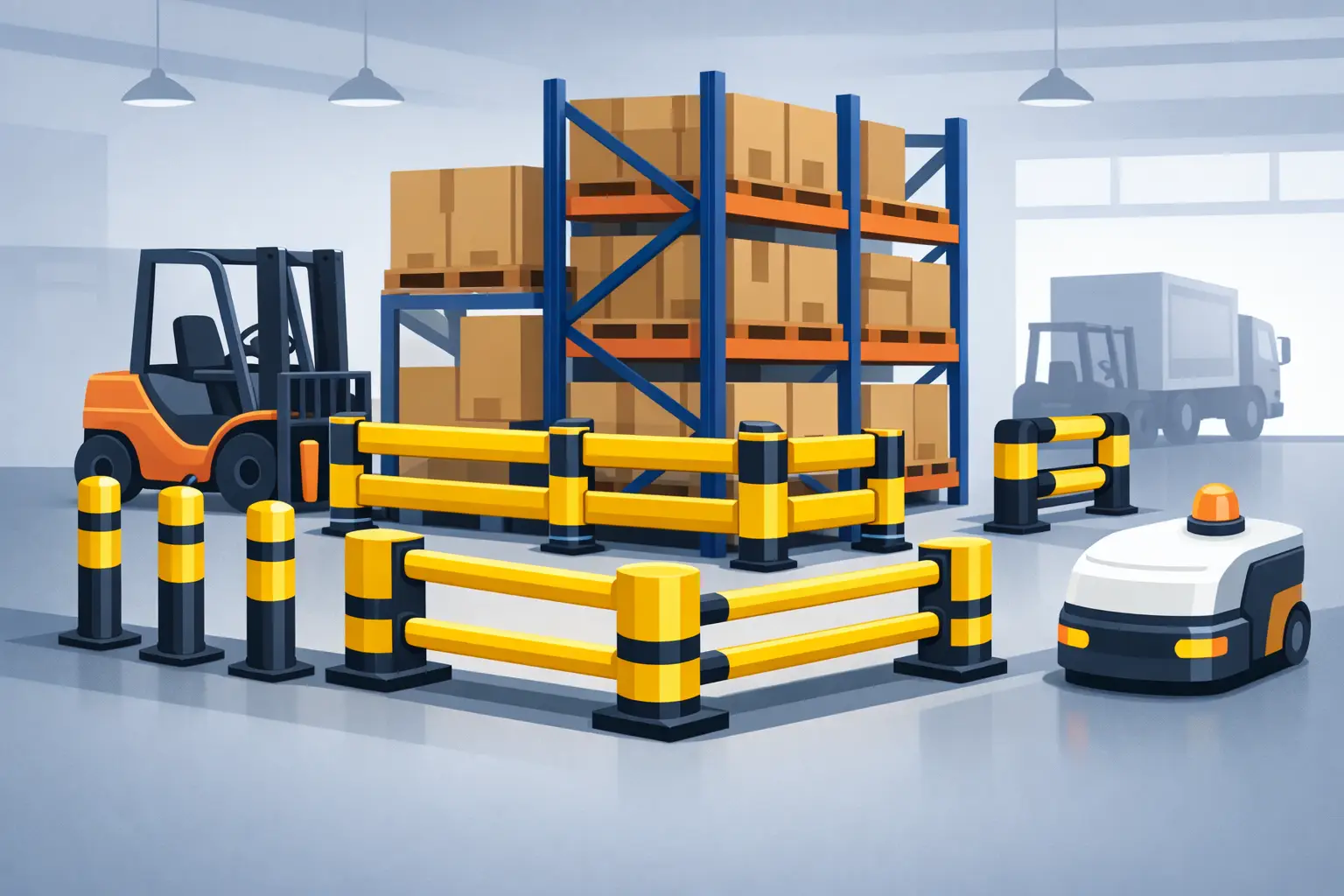
At their core, warehouse barrier protection systems separate people from moving equipment and shield critical assets from impact. That sounds straightforward, but in practice they do several jobs at once. They define traffic boundaries, create safer pedestrian routes, absorb or deflect impact energy, and reduce damage to racks, doors, columns, machinery, and workstations.
They also support more consistent behavior on the floor. When traffic paths are physically reinforced, operators are less likely to cut corners, drift into pedestrian zones, or crowd vulnerable infrastructure. In that sense, barriers are not only protective devices. They are part of how a facility communicates safe movement.
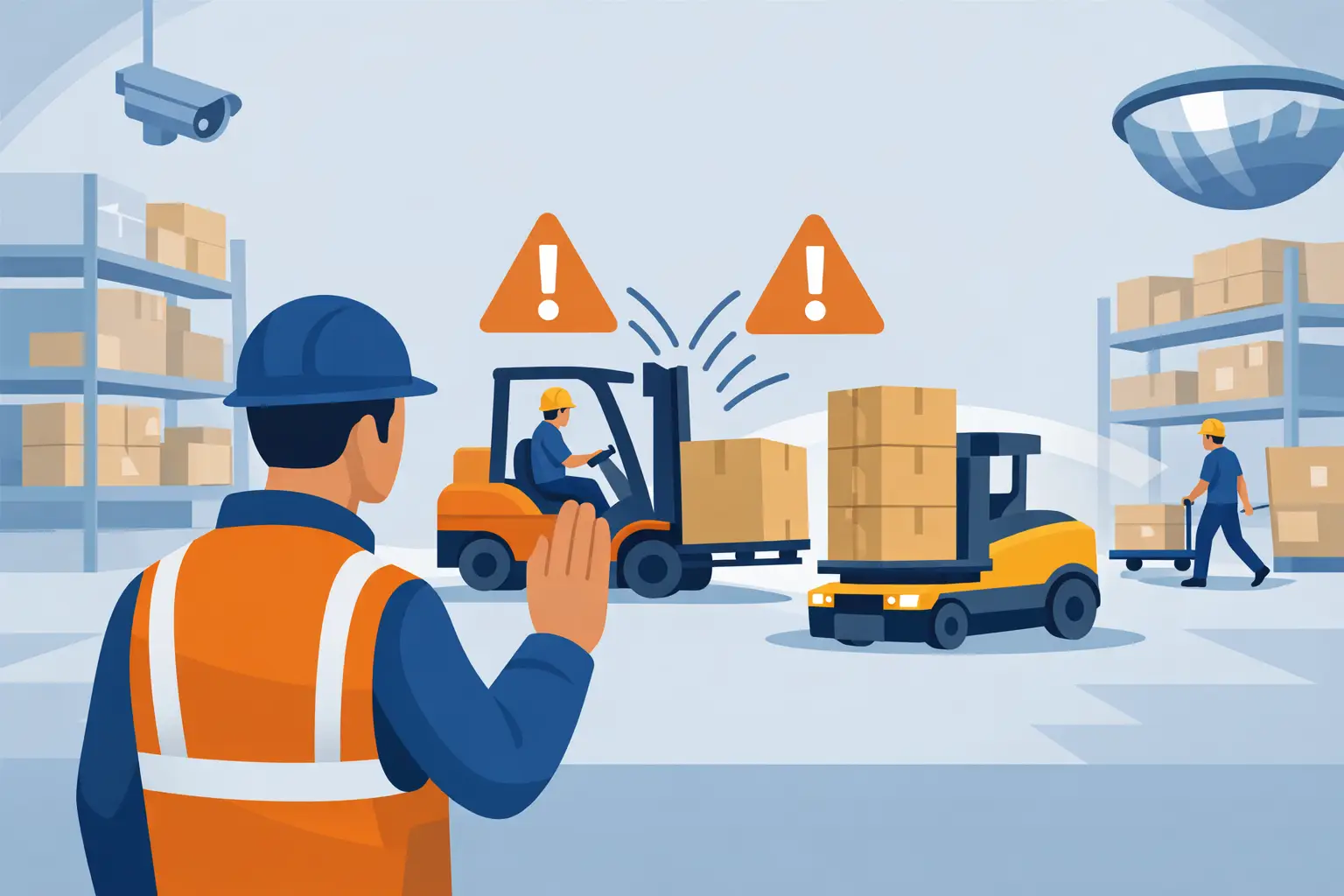
This matters most in environments with constant forklift travel, tight aisle navigation, staging congestion, and mixed traffic involving pallets, pedestrians, and powered equipment. In those settings, painted floor lines alone are rarely enough. Visual rules help, but physical protection changes outcomes.
Where barriers deliver the most value
Not every area needs the same level of protection. High-performing facilities usually prioritize barrier placement around repeated impact points and high-consequence assets.
Rack ends are one of the clearest examples. These locations take frequent hits during turning and pallet handling, especially where space is limited or visibility is reduced. A small impact today can weaken structural integrity over time. Barrier protection helps prevent cumulative damage that may not be obvious until it becomes serious.
Pedestrian walkways are another priority. If workers on foot share space with forklifts, even briefly, separation should be treated as a control measure, not a convenience. Guardrails and pedestrian barriers provide a physical boundary that floor markings cannot.
Loading areas, staging lanes, door frames, control panels, and building columns also deserve attention. Damage in these zones often affects more than one cost category. A single strike can trigger repair work, interrupt throughput, compromise safety compliance, and create avoidable exposure for the business.
Choosing the right warehouse barrier protection systems
The right system depends on the hazard, the asset being protected, and the force likely to be involved. This is where many projects go wrong. A barrier that works for pedestrian guidance may not be suitable for vehicle impact. A low-profile guard that protects a machine base may do very little for a rack corner exposed to turning forklifts.
Material selection matters. Steel barriers are often chosen for fixed heavy-duty protection, particularly where repeated high-force impacts are expected and the surrounding structure can support the load transfer. Polymer and flexible barrier systems can be a better fit in some warehouse environments because they absorb impact differently, reduce floor damage, and may lower repair requirements after minor to moderate collisions. Neither approach is automatically better. It depends on traffic type, speed, vehicle weight, and the operational consequences of barrier deflection.
Barrier height also needs to match the risk. Protecting against forks, wheels, or counterweights requires a different design than separating pedestrians from moving equipment. In many cases, layered protection is the better answer – for example, rack-end barriers at floor level combined with pedestrian guardrails along adjacent walkways.
Visibility should not be treated as an afterthought. High-contrast finishes help operators and pedestrians identify protected zones quickly, especially in busy or low-light areas. But visibility alone is not protection. It works best when paired with structural performance.
Why layout matters as much as the product
A strong barrier installed in the wrong place can still leave a facility exposed. Effective protection starts with traffic mapping. You need to know where forklifts turn sharply, where congestion builds, where pedestrians naturally cross, and where operators have limited sightlines.
This is why a consultative approach delivers better results than buying barrier products in isolation. The goal is not to place as much hardware as possible. It is to reduce exposure without disrupting flow. Sometimes the best intervention is a continuous guardrail run. In other cases, targeted protection at rack ends, corners, and columns solves most of the problem with less installation footprint.
There are trade-offs. Over-barriering can narrow travel paths, complicate maintenance access, and create pinch points if the layout is not carefully planned. Under-protecting leaves critical areas exposed. The best outcome sits between those extremes: enough physical separation and impact protection to materially reduce risk, without making the warehouse harder to operate.
Protection is also a maintenance strategy
Many facilities first look at barriers after a damage event. A column gets struck, a rack upright needs replacement, or a door frame has been hit too many times. But waiting for visible damage is expensive. Repeated impacts shorten the life of assets, create hidden structural concerns, and pull maintenance teams into reactive work that could have been avoided.
Warehouse barrier protection systems support a more controlled maintenance environment. By reducing impact frequency and severity, they help preserve racks, building structures, and equipment over time. That means fewer emergency repairs, fewer operational interruptions, and better use of maintenance resources.
This is also where total cost matters more than purchase price. A lower-cost barrier that fails early or needs constant replacement may cost more over its service life than a properly engineered system. Industrial buyers already understand this principle in machinery and infrastructure. Safety controls should be evaluated the same way.
Compliance matters, but operations matter too
Safety leaders often need to justify barrier investment through compliance, and that is valid. Physical protection supports safer work environments and can help demonstrate that known vehicle and pedestrian risks are being addressed. But the business case should not stop there.
Barrier systems also protect throughput. When assets are damaged, operations slow down. When near misses increase, supervision time goes up. When pedestrian exposure remains unmanaged, the severity potential of any incident becomes unacceptable. Safety and performance are not competing priorities here. In a warehouse, they are tightly connected.
That is why the strongest projects are usually owned by both operations and EHS. One side understands traffic reality and productivity constraints. The other understands hazard control and risk reduction. Together, they can define a solution that protects people without compromising the pace of work.
Installation quality and long-term support
Even a well-specified barrier can underperform if it is installed poorly. Anchorage, spacing, substrate condition, and impact orientation all affect how a system behaves in the real world. Facilities should pay close attention to engineering fit, not just product selection.
Long-term support matters as well. Warehouses change. Traffic patterns shift, staging areas expand, and equipment fleets evolve. A barrier layout that worked two years ago may need adjustment after a process redesign or capacity increase. That is one reason many industrial operators prefer a partner that can assess risk, recommend the right configuration, install correctly, and support changes over time.
For companies operating across multiple sites, standardization can also become a major advantage. Consistent protection strategies make facilities easier to manage, easier to inspect, and easier to improve at scale. That is the kind of practical safety thinking that turns a one-time purchase into a long-term risk reduction program.
SysGuard approaches this as an engineering and operations issue, not just a product category. That distinction matters when the objective is not simply to add barriers, but to prevent incidents and keep facilities running safely.
What good barrier planning looks like
A good barrier plan starts with a walk-through of the actual risk environment. Where are the strike points? Where do pedestrians and forklifts interact? Which assets create the highest consequence if damaged? From there, the answer usually becomes clearer.
Some facilities need heavy protection around rack ends and columns first. Others need stronger pedestrian segregation near picking zones, packing stations, or staging lanes. In higher-traffic operations, barrier design may need to work alongside visual alerts, traffic controls, and forklift safety measures rather than standing alone.
The key is to treat warehouse barrier protection systems as part of a broader safety architecture. When they are selected with real operating conditions in mind, they do more than absorb impact. They shape movement, reinforce safe behavior, and protect the people and infrastructure your operation depends on every shift.
Every worker deserves to return home safely. A well-planned barrier system helps make that expectation real, one protected aisle, walkway, and impact point at a time.