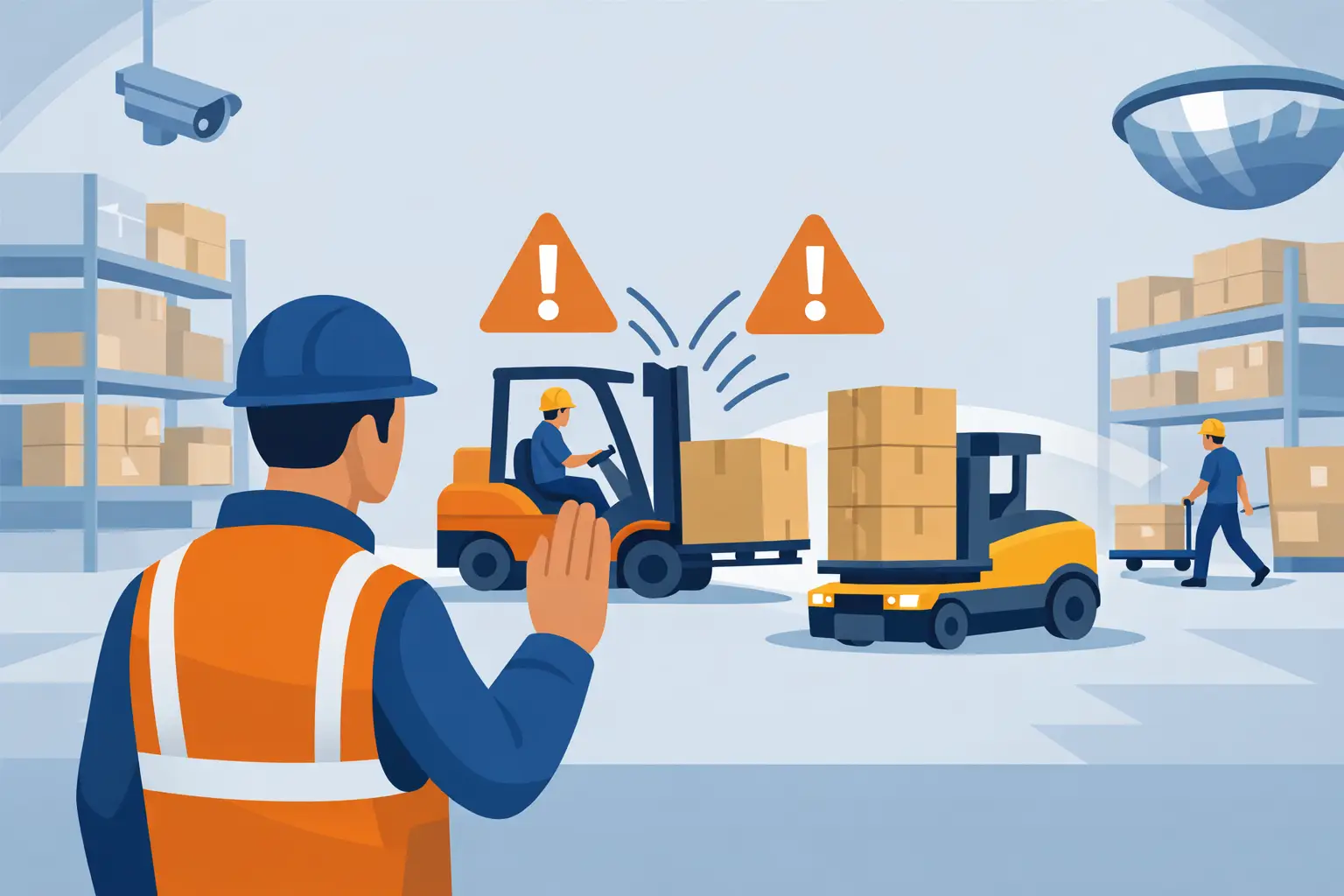
A near miss at a warehouse intersection rarely looks dramatic on paper. A forklift brakes hard, a pedestrian steps back, and operations continue. But for EHS leaders and operations managers, that moment is a warning. A proper forklift safety system review starts there – not with product brochures, but with the real risks inside your facility, the behaviors on your floor, and the cost of getting it wrong.
Forklift safety systems are often presented as simple add-ons. In practice, they are part of a larger risk-control strategy that affects people, equipment, traffic flow, and uptime. The right system can reduce collision exposure, improve operator awareness, and support compliance goals. The wrong one can create false confidence, nuisance alarms, or a rollout that never gains traction.
What a forklift safety system review should actually measure
A useful review is not just a comparison of features. It should assess whether a system can reduce risk in the operating conditions you have today. That means looking at blind corners, mixed traffic zones, loading areas, narrow aisles, rack ends, and places where speed and visibility become a problem.
Too many reviews focus only on detection range, alert volume, or hardware specs. Those details matter, but they are not enough. A system has value when it fits the environment, works consistently across shifts, and influences behavior before an incident occurs.
For most industrial sites, evaluation comes down to five questions. Does it address the highest-risk interactions? Will operators and pedestrians respond correctly to the alerts? Can it handle your site conditions, including dust, lighting, and noise? Will it integrate into daily operations without slowing throughput unnecessarily? And can it be supported properly after installation?
The main categories in a forklift safety system review
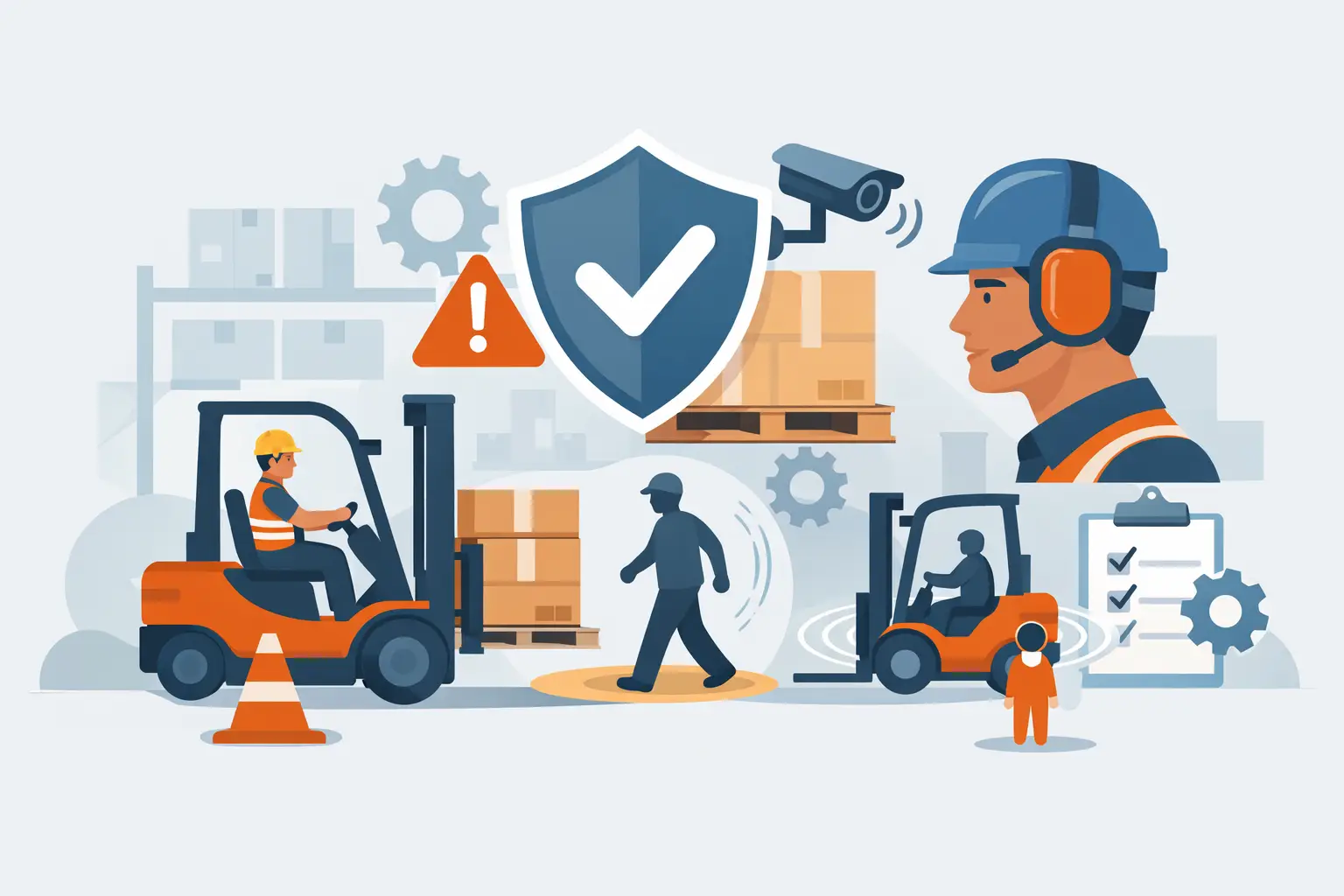
Most forklift safety systems fall into a few practical groups, and each solves a different problem.
Proximity warning systems are designed to detect forklifts, pedestrians, or both when they enter a defined risk zone. These systems are useful in mixed-traffic environments where people and vehicles routinely cross paths. Their strength is early warning. Their limitation is that performance depends heavily on proper zone setup and user response.
Collision avoidance systems go a step further by identifying potential vehicle-to-vehicle or vehicle-to-person conflicts. In some cases, they can trigger controlled responses such as speed reduction or access restrictions. These systems are valuable in busy facilities, but they require more careful design. If alerts happen too often, users begin to ignore them.
Visual warning systems use projected lights, strobes, and crossing indicators to make forklift movement more visible. They are often effective at blind intersections, aisle exits, and pedestrian crossing zones. They are generally easy to understand and quick to adopt, but they should not be treated as a complete solution where risk is high.
Audible alert systems provide horn-based or voice-based warnings tied to movement, reversing, or zone entry. These can improve awareness, especially when visibility is blocked. The trade-off is obvious. In loud facilities, they may be missed. In quieter spaces, too much alarm activity can create fatigue.
Vision AI and camera-based systems are becoming more relevant in advanced safety programs. They can identify unsafe interactions, monitor zones, and support incident analysis. They offer strong visibility into behavior and patterns, but they also require disciplined implementation, calibration, and data ownership planning.
Where systems differ in real-world performance
The difference between a workable system and a disappointing one often comes down to the operating environment. A clean manufacturing floor with fixed routes is easier to protect than a fast-moving warehouse with temporary stock placement, uneven traffic density, and frequent contractor access.
Detection reliability is one major point of separation. Some systems perform well in controlled demonstrations but struggle with obstructions, reflective surfaces, or crowded layouts. Others are more forgiving but less precise. Precision sounds better, but if a highly tuned system misses events because conditions change, that precision is not helping you.
Alert design also matters more than many buyers expect. A warning only works if the person receiving it understands what it means and has time to react. If every alert sounds the same, or if there is no clear distinction between low-risk and high-risk events, the system becomes background noise.
Durability is another dividing line. Forklift environments are unforgiving. Vibration, impacts, dust, washdowns, and temperature swings expose weak installations quickly. A system that looks cost-effective upfront may become expensive if sensors drift, mounts fail, or service calls increase.
This is why engineering support matters. A technically capable product still needs proper placement, site-specific configuration, commissioning, and follow-up. For many operations, the success of the project depends as much on implementation quality as on the hardware itself.
How to judge fit, not just features
A forklift safety system review should always begin with the site, not the catalog. Start by identifying where incidents are most likely, not where technology is easiest to install. Near misses, damaged racking, pedestrian complaints, blind turns, and loading congestion all point to the controls that deserve attention first.
Then look at traffic behavior. Are pedestrians staying within marked walkways, or are they cutting across active vehicle lanes? Are operators traveling with blocked forward vision? Are intersections controlled, or largely informal? Safety systems are most effective when they reinforce disciplined movement patterns rather than compensate for unmanaged ones.
Facility leaders should also consider how much intervention the operation can realistically absorb. A high-control system may be right for a hazardous area with repeated exposure. In a lower-risk zone, simpler visual and audible controls may deliver better adoption with less operational friction. It depends on the severity of risk, the maturity of the site, and the level of management oversight available.
That is where a consultative approach adds value. A provider with engineering depth can assess the environment, identify control layers, and recommend a mix of systems instead of forcing one product into every problem. For industrial buyers, that usually leads to stronger long-term results than purchasing isolated devices.
Common mistakes in forklift safety system reviews
One common mistake is treating safety technology as a substitute for traffic management. No warning system can correct a poorly planned layout, uncontrolled crossing points, or weak operator discipline on its own. Technology should strengthen your controls, not replace them.
Another mistake is buying based on demonstration impact. A system may look impressive in a short trial because the alerts are new and everyone is paying attention. The better question is what happens after 90 days, when the operation returns to normal pace and workers have adapted to the signals.
Some teams also underestimate change management. Operators and pedestrians need to know what each alert means, what action is expected, and why the system is in place. If the rollout is framed only as enforcement, adoption may suffer. If it is positioned as a worker protection measure tied to real site risks, response is usually better.
Procurement-driven decisions can create problems too. Lowest initial price rarely reflects total cost. Installation quality, maintenance requirements, false alarm rates, spare parts availability, and local technical support all influence lifecycle value.
A practical framework for your forklift safety system review
Start with risk mapping. Identify zones with the highest exposure to forklift-pedestrian interaction, vehicle conflict, infrastructure damage, or poor visibility. Use incident history, supervisor input, and direct observation.
Next, define the control objective for each zone. Some areas need early pedestrian warning. Others need intersection visibility, speed control, or driver awareness during reversing and turning. Matching the system to the control objective is more effective than applying one technology everywhere.
Then validate usability. Can alerts be seen in your lighting conditions? Can they be heard above ambient noise? Will they remain meaningful across all shifts? A system that works in a quiet pilot area may fail in a live production environment.
After that, review implementation support. This includes site assessment, installation standards, commissioning, training, maintenance planning, and post-install adjustment. Providers with industrial experience tend to approach these details more rigorously because they know reliability depends on more than hardware.
Finally, measure outcomes that matter. Look beyond installation completion. Track near misses, traffic violations, forklift damage, pedestrian exposure, and incident trends over time. The goal is not to say a system was installed. The goal is to confirm that risk was reduced.
For warehouse and plant leaders, the best forklift safety system review is the one that stays grounded in operational reality. Safety technology should protect workers, preserve equipment, and support business continuity without creating new uncertainty. If the system fits your site, your people understand it, and the provider can support it properly, you are not just buying a device. You are building a safer operation where more people go home unhurt at the end of the day.