A loading bay can look routine right up to the moment it fails. A trailer creeps away from the dock. A forklift crosses a threshold before the vehicle is secured. A pedestrian steps into a blind spot. These are not rare edge cases. They are common operational risks, which is why knowing how to secure loading bay operations matters for safety, uptime, and business continuity.
For warehouse managers, EHS leaders, and operations teams, the loading bay is one of the highest-risk areas in the facility. It brings together moving vehicles, time pressure, uneven surfaces, shifting loads, and multiple people working in a confined space. When controls are weak, the result can be serious injury, damaged goods, dock impact, and avoidable delays. When controls are well designed, the loading bay becomes safer, more predictable, and more efficient.
How to secure loading bay operations starts with risk visibility
Most loading bay incidents do not come from a single failure. They come from gaps between people, process, and equipment. A driver may not understand site rules. A dock team may rely on hand signals and habit instead of clear interlocks. A facility may install physical protection in one area but leave blind spots unaddressed in another.
That is why the first step is not buying hardware. It is understanding how risk actually moves through the bay. Look at vehicle arrival, trailer positioning, wheel restraint or docking method, door opening, forklift movement, pedestrian routes, and vehicle departure. Review near misses, not just recordable incidents. In many facilities, the warning signs appear well before an injury does.
A proper assessment should focus on where unintended movement can happen, where visibility breaks down, and where human judgment is carrying too much of the load. If your operation depends on people remembering every step perfectly during busy shifts, the system is already exposed.
Control trailer movement before loading begins
One of the most serious loading bay hazards is premature vehicle departure or trailer creep during loading and unloading. Forklifts moving between the dock and trailer create dynamic forces. Even small movement can leave a gap, destabilize loads, or cause equipment to drop at the dock edge.
Securing the vehicle before activity begins is essential. The right method depends on your dock design, trailer types, traffic pattern, and operating volume. In some facilities, wheel chocks may still be used, but they depend heavily on consistent manual placement and verification. In high-throughput environments, that level of dependence on human behavior is often not enough.
Vehicle restraint systems provide a stronger control because they physically prevent trailer movement and create a clearer, more enforceable process. When paired with dock signals and interlocked procedures, they reduce ambiguity for both drivers and dock staff. The trade-off is cost and integration effort, but for facilities with frequent trailer activity, the reduction in risk and disruption often justifies the investment.
This is a good example of where compliance and operational performance align. A secured trailer is not only safer. It also reduces hesitation, confusion, and stoppages during loading.
Match the restraint method to your real operating conditions
Not every bay handles the same fleet mix. Some sites receive standardized trailers all day. Others deal with varied vehicle heights, container trucks, or third-party carriers with inconsistent equipment. A control measure that works well in a closed-loop operation may be less effective in a mixed transport environment.
The practical question is not which system looks best on paper. It is which one your team can apply consistently under real shift conditions. If a safety control adds too much friction, people will work around it. Good loading bay protection should make the safe action the easiest action.
Separate people and moving equipment wherever possible
Pedestrian exposure is a major contributor to loading bay risk. At many sites, the bay becomes a shared zone where drivers, pickers, forklift operators, and supervisors cross paths. That creates constant conflict points, especially during busy receiving windows.
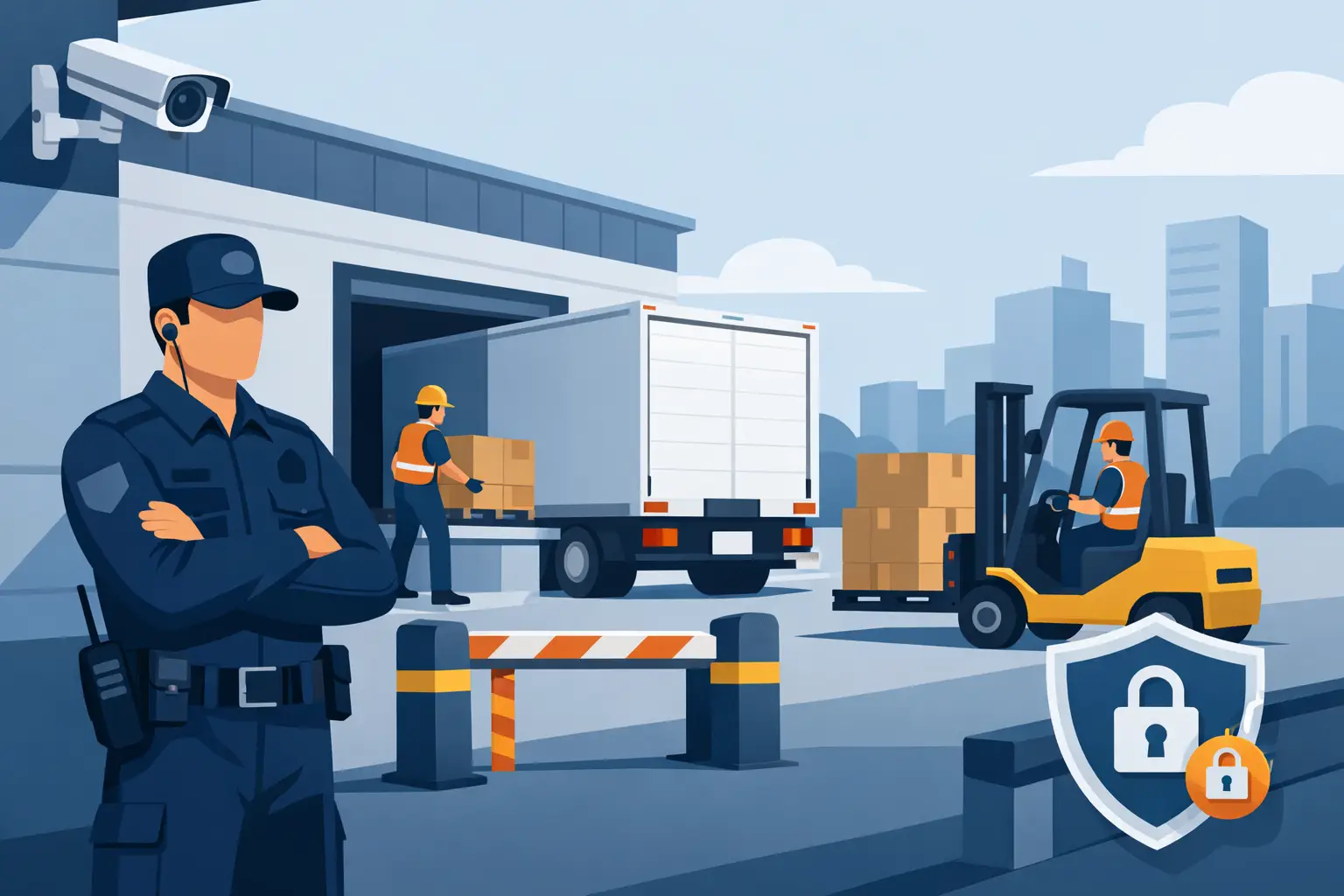
The most effective approach is physical separation. Marked walkways help, but markings alone are easy to ignore when traffic builds. Barriers, controlled access points, and defined waiting areas provide a much stronger layer of protection. If drivers need to report in, wait, or hand over documents, give them a safe place to do it without entering forklift routes.
Forklift travel paths also need attention at the dock face. Operators are often moving quickly, handling awkward loads, and transitioning across levelers or thresholds. Guarding exposed edges, protecting door frames and dock structures, and reducing ad hoc pedestrian movement all lower the chance of impact or struck-by incidents.
Blind spots need active controls, not just signage
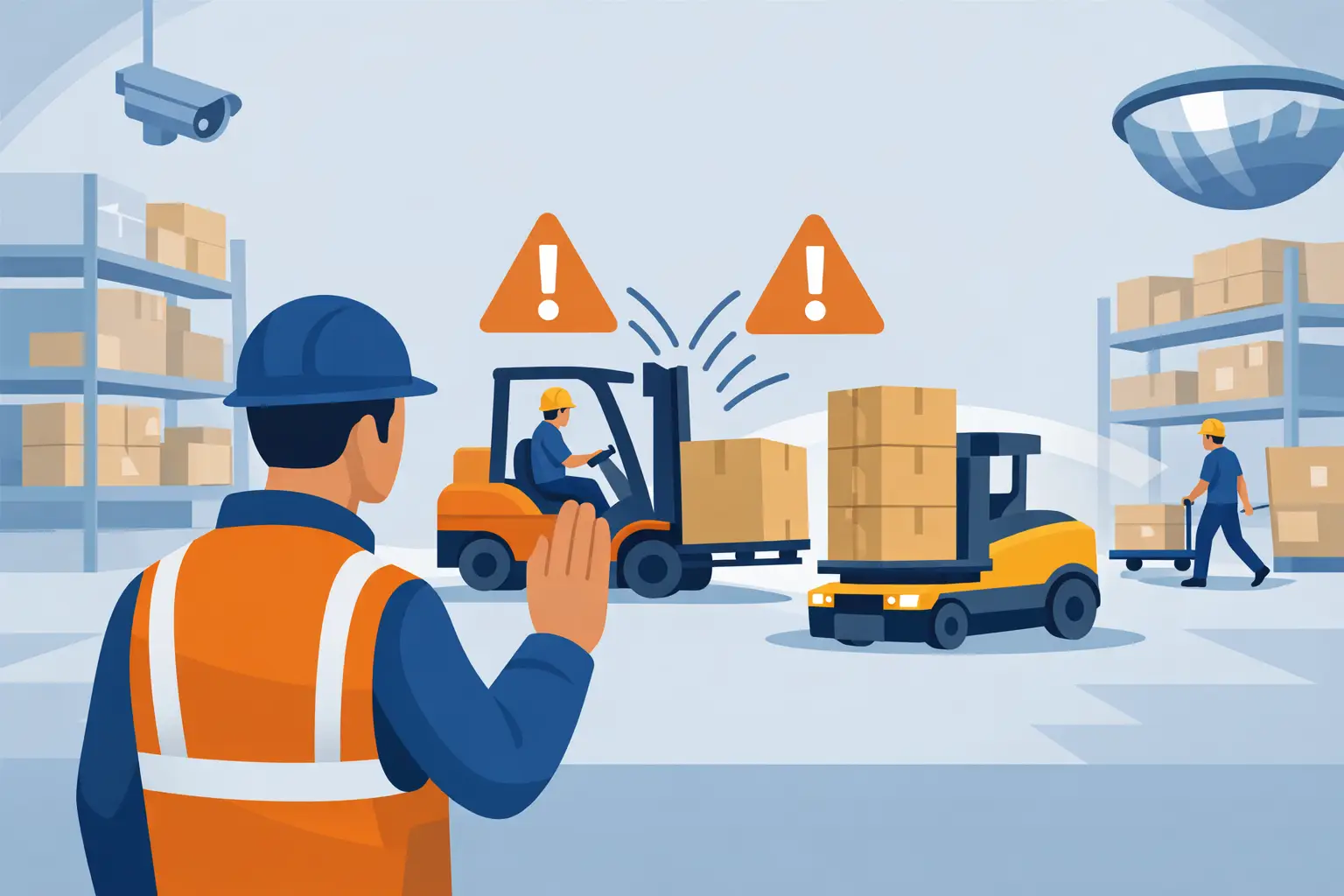
Signs have value, but they do not solve visibility problems. Loading bays are full of visual obstruction from trailers, stacked goods, dock shelters, and structural columns. Add noise, fatigue, and shift pressure, and relying on awareness alone becomes risky.
This is where active warning systems can make a measurable difference. Audible and visual alerts at key crossing points help communicate movement in real time. In more complex facilities, sensor-based or Vision AI systems can detect interaction risks and trigger warnings before contact occurs. These technologies are not a replacement for good layout and training, but they strengthen control where sightlines and human attention are unreliable.
Standardize dock procedures so safety is repeatable
A secure loading bay does not depend on the most experienced shift leader being present. It depends on a process that works every time, across teams and shifts.
That means defining a clear sequence for vehicle arrival, dock assignment, restraint application, signal confirmation, door operation, loading activity, and release. Each step should have visible status indicators and accountability. If a forklift operator cannot confirm at a glance that a trailer is secured and safe to enter, the process still has a weakness.
Written procedures matter, but they are only one part of the control. The stronger approach is to combine procedures with physical and visual systems that reinforce the right action. Traffic lights, dock status indicators, bay-specific alerts, and interlocked equipment reduce the need for guesswork.
Training should also reflect what really happens at the dock. Generic annual refreshers are rarely enough for high-risk areas. Focus on scenario-based training that covers trailer movement, early departure attempts, communication failures, and pedestrian intrusion. The goal is not just awareness. It is disciplined response.
Protect the dock infrastructure itself
When discussing how to secure loading bay operations, many teams focus on people and vehicles but overlook the condition of the bay itself. Damaged dock edges, worn levelers, bent guides, and unprotected columns can all increase risk. Infrastructure damage is often treated as a maintenance issue when it should also be treated as a safety signal.
Repeated impacts usually point to a deeper problem with vehicle alignment, speed control, visibility, or layout. Protective barriers, dock bumpers, guide systems, and impact-resistant guarding can reduce damage, but they work best when part of a broader strategy. If your bay is being hit regularly, ask why operators and drivers are being placed in a position where impact is likely.
This matters financially as well. Infrastructure damage creates downtime, disrupts flow, and can force temporary workarounds that make the area even less safe. Protecting the bay structure supports both resilience and throughput.
Use data to improve loading bay safety over time
A secure loading bay is not a one-time project. Traffic patterns change. Carrier mix changes. Throughput increases. New shifts and temporary labor introduce variability. Controls that were adequate two years ago may no longer match the operational reality.
That is why ongoing review matters. Track near misses, trailer movement events, dock impacts, pedestrian incursions, and unsafe release attempts. Look for repeat locations, repeat times, and repeat behaviors. If one bay has more incidents than the others, there is usually a reason beyond bad luck.
Technology can help here as well. Facilities using connected alert systems or intelligent detection tools can gain a clearer view of where risk is forming. The value is not just incident response. It is the ability to intervene earlier, before unsafe patterns become normalized.
For operations leaders, that makes loading bay safety easier to justify as a business decision. Fewer incidents mean fewer disruptions, less damage, stronger compliance, and more stable output. Safety is not separate from performance at the dock. It supports it.
A safer loading bay rarely comes from one product or one policy. It comes from building layers of control that reflect how your operation actually works – vehicle restraint, pedestrian separation, clear procedures, active warnings, and infrastructure protection working together. Every worker deserves to return home safely every day, and every facility deserves a loading operation designed to make that outcome more certain.