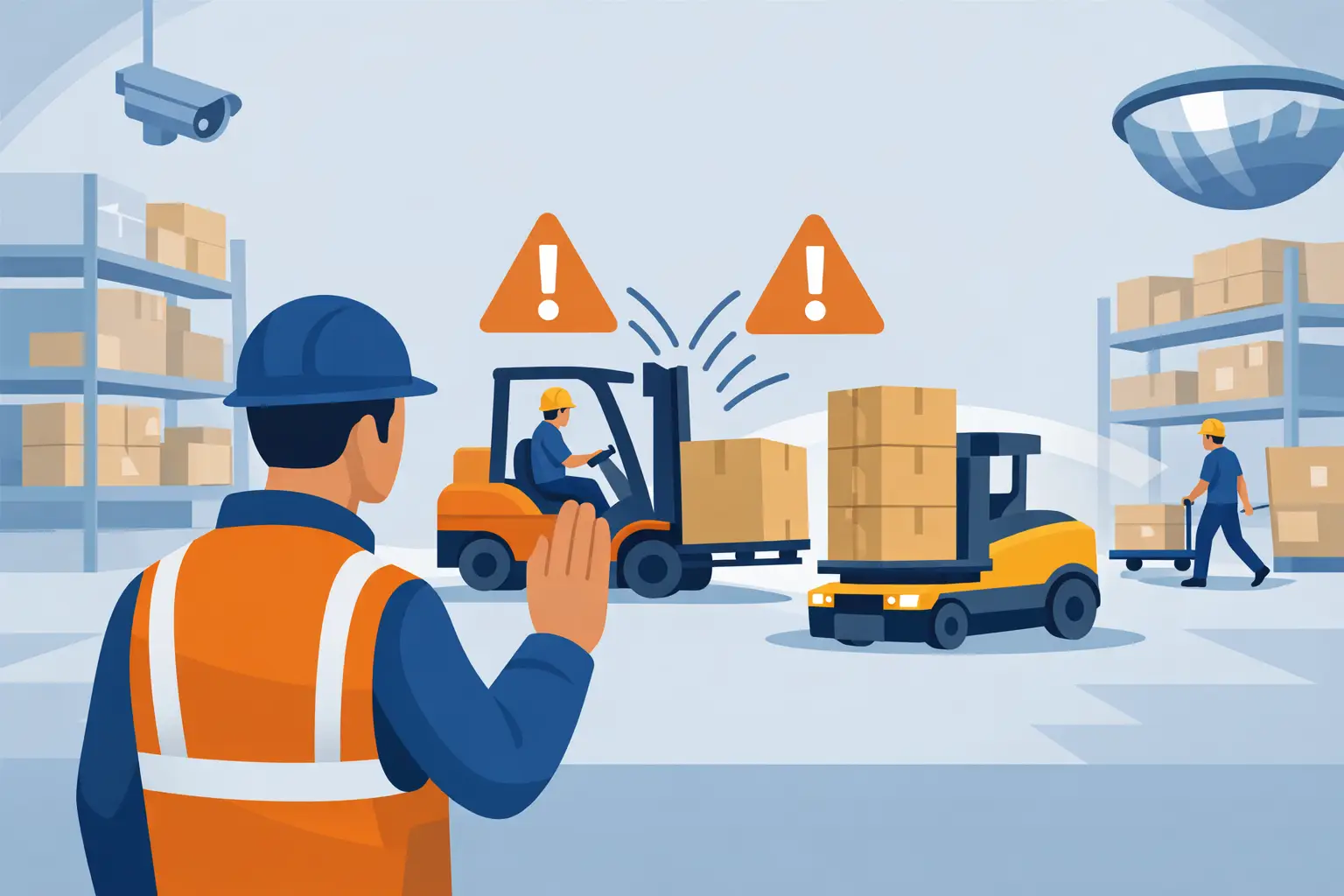
A forklift cuts across a pedestrian walkway, a worker steps into a blind spot, and a loading bay stays active a few seconds too long. Most serious incidents in industrial facilities do not start with a major failure. They start with a moment that no one catches in time. That is exactly why people ask, what is vision AI safety, and whether it can make a measurable difference on the floor.
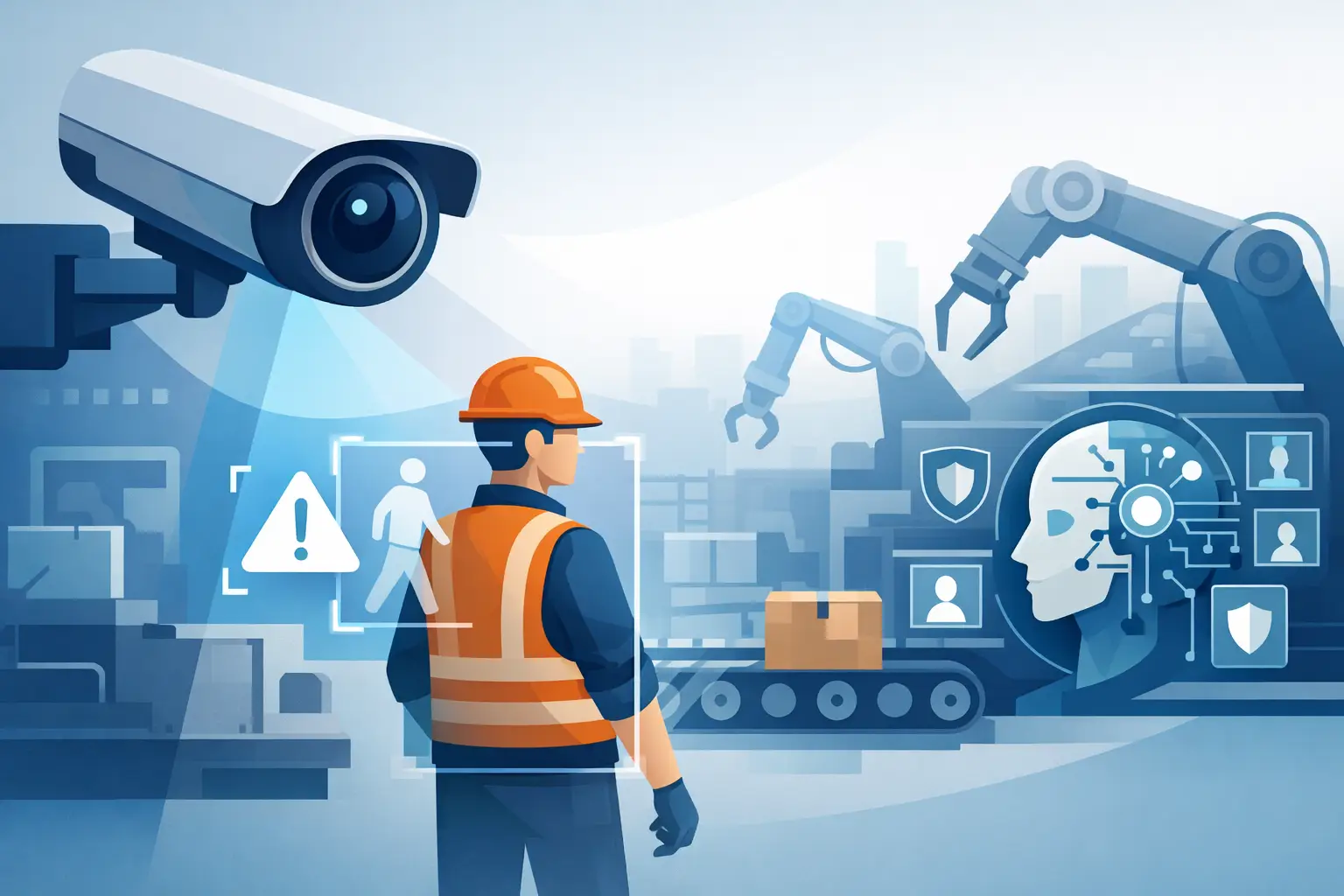
Vision AI safety is the use of camera-based artificial intelligence to detect unsafe conditions, risky movement, and rule violations in real time, then trigger alerts or actions to help prevent an incident before it happens. In practical terms, it gives facilities another layer of awareness in areas where human attention, mirrors, signs, and standard sensors have limits.
What is vision AI safety, really?
In an industrial setting, vision AI safety combines cameras, software, and configured safety logic to interpret what is happening in a live environment. Instead of only recording video for later review, the system analyzes scenes as they happen. It can recognize people, vehicles, zones, direction of travel, speed patterns, or specific behaviors depending on the design.
That difference matters. Traditional CCTV tells you what happened after a near miss or injury. Vision AI safety is built to identify risk while there is still time to intervene.
A common example is a mixed-traffic warehouse where forklifts and pedestrians operate in the same space. A vision AI system can monitor a crossing point, detect when both a person and vehicle are entering the same hazard zone, and activate audible or visual alerts immediately. In some applications, it can also connect to barriers, warning beacons, access controls, or broader site safety systems.
Why industrial facilities are adopting it now
Safety leaders are under pressure from multiple directions. They need to reduce injuries, maintain throughput, support compliance, and avoid costly downtime. At the same time, labor turnover, busier facilities, and tighter operating windows make it harder to rely on manual observation alone.
That is where vision AI safety becomes valuable. It does not replace training, supervision, or physical safeguards. It strengthens them by monitoring high-risk areas continuously and consistently.
For warehouse managers and EHS teams, that can mean earlier warnings at pedestrian crossings, better control around loading bays, and improved visibility into recurring unsafe behaviors. For operations leaders, it can also mean fewer disruptions from equipment damage, incident investigations, and workflow interruptions after avoidable events.
The appeal is not only that the technology is advanced. It is that the technology is practical. If it can reduce exposure in known risk zones and support better decisions, it helps protect people while preserving operational continuity.
How vision AI safety works on the floor
The basic concept is straightforward. Cameras are placed in areas where risk is concentrated, such as forklift intersections, loading docks, staging lanes, rack aisles, or restricted access zones. The AI model is then configured to identify certain objects, movements, or conditions relevant to that environment.
Once the system detects a defined event, it responds based on the safety objective. That response may be a flashing light, an audible alarm, a dashboard notification, a logged event for analysis, or integration with another protective device.
The quality of the outcome depends on more than the camera itself. Placement, field of view, lighting conditions, traffic patterns, and rule configuration all affect performance. A well-designed system is not just installed. It is engineered around the actual operational risk.
That is an important distinction for industrial buyers. Vision AI safety is not a generic camera package. It works best when the detection logic is matched to the site layout, hazard profile, and response requirement.
Common use cases
In warehouses, one of the most common uses is pedestrian and forklift separation. Where painted walkways and warning signs are not enough, AI-based monitoring can add active detection and alerts.
At loading bays, vision AI can help monitor unsafe entry, premature vehicle movement, or people entering zones during active loading. In manufacturing plants, it may be used around machine approaches, internal vehicle routes, or exclusion zones where unauthorized access creates risk.
Some facilities also use it to identify repeated near misses and congestion patterns. That is useful because not every problem requires a new rule or bigger barrier. Sometimes the real issue is layout, line marking, shift behavior, or traffic flow design.
What vision AI safety does well
Its strongest value is consistency. Cameras do not look away, and well-configured AI does not get distracted during a busy shift. In high-movement environments, that constant observation can help catch conditions that people miss.
It also performs well in dynamic spaces where hazards are created by movement, timing, and interaction, not only by fixed conditions. A barrier protects a point. A vision AI system can monitor how people and vehicles behave around that point.
Another advantage is data. Over time, event records can show where risks happen most often, at what times, and under what operating conditions. That gives safety and operations teams a stronger basis for targeted improvements. Instead of reacting only after an incident, they can address patterns earlier.
For companies serious about prevention, that shift matters. Better visibility into near misses is often where meaningful safety improvement begins.
Where it has limits
Vision AI safety is powerful, but it is not magic. Camera performance can be affected by poor lighting, dust, glare, obstructions, or complex visual environments. Busy facilities with changing layouts can also require tuning and ongoing review.
There is also a broader point. Vision AI should not be treated as a substitute for physical safety measures where those are required. If a loading bay needs interlocks, restraints, barriers, or clear procedural control, AI should support that framework, not replace it.
False positives and false negatives are another real consideration. If the system triggers too often for low-value events, workers may start ignoring alerts. If detection logic is too narrow, meaningful hazards may be missed. That is why implementation quality matters as much as the technology itself.
For many sites, the best approach is layered protection. Use physical safeguards, line marking, training, signage, and procedural controls as the foundation. Then apply vision AI where real-time detection adds another level of risk reduction.
What buyers should evaluate before deployment
The right question is not simply whether the system uses AI. The right question is whether it solves a defined risk problem in your environment.
Start with the hazard. Is the issue pedestrian and vehicle interaction, blind spots, unauthorized entry, unsafe loading bay movement, or repeated near misses in congested zones? A clear problem definition leads to better system design.
Then assess the site conditions. Camera-based systems need suitable mounting positions, reliable visibility, and environmental conditions that support dependable detection. If an area is poorly lit, heavily obstructed, or frequently reconfigured, that should be addressed early in the planning stage.
Integration also matters. A standalone alert may be enough in some areas. In others, the system needs to connect with beacons, audible alarms, barriers, door controls, or site monitoring tools. The required response should drive the design.
Finally, consider support. Industrial safety systems are not one-time purchases. They need commissioning, testing, adjustment, and service. A solution partner with engineering depth and implementation experience can help reduce risk from day one and improve long-term performance.
What is vision AI safety worth to the business?
The first answer is simple. It helps protect people. Every worker deserves to return home safely every day, and facilities have a responsibility to reduce foreseeable risk wherever possible.
The second answer is operational. Incidents affect more than injury rates. They damage equipment, interrupt workflows, trigger investigations, increase downtime, and put pressure on teams already managing tight schedules. Preventing a single serious event can protect both people and business continuity.
That is why the value conversation should not be limited to compliance. Vision AI safety can support a stronger safety culture, but it can also improve how an operation sees and manages risk in motion. In facilities where forklift traffic, loading activity, and pedestrian exposure are constant, that added awareness can become a practical advantage.
For organizations evaluating next steps, the real opportunity is to focus on the places where traditional controls still leave a gap. When a system is designed around the actual hazard, implemented with engineering discipline, and maintained as part of a wider safety strategy, vision AI becomes more than surveillance. It becomes an active part of prevention.
Accidents happen. But many of the moments that lead to them can be detected earlier, managed faster, and reduced with the right controls in place. That is where vision AI safety earns its place.