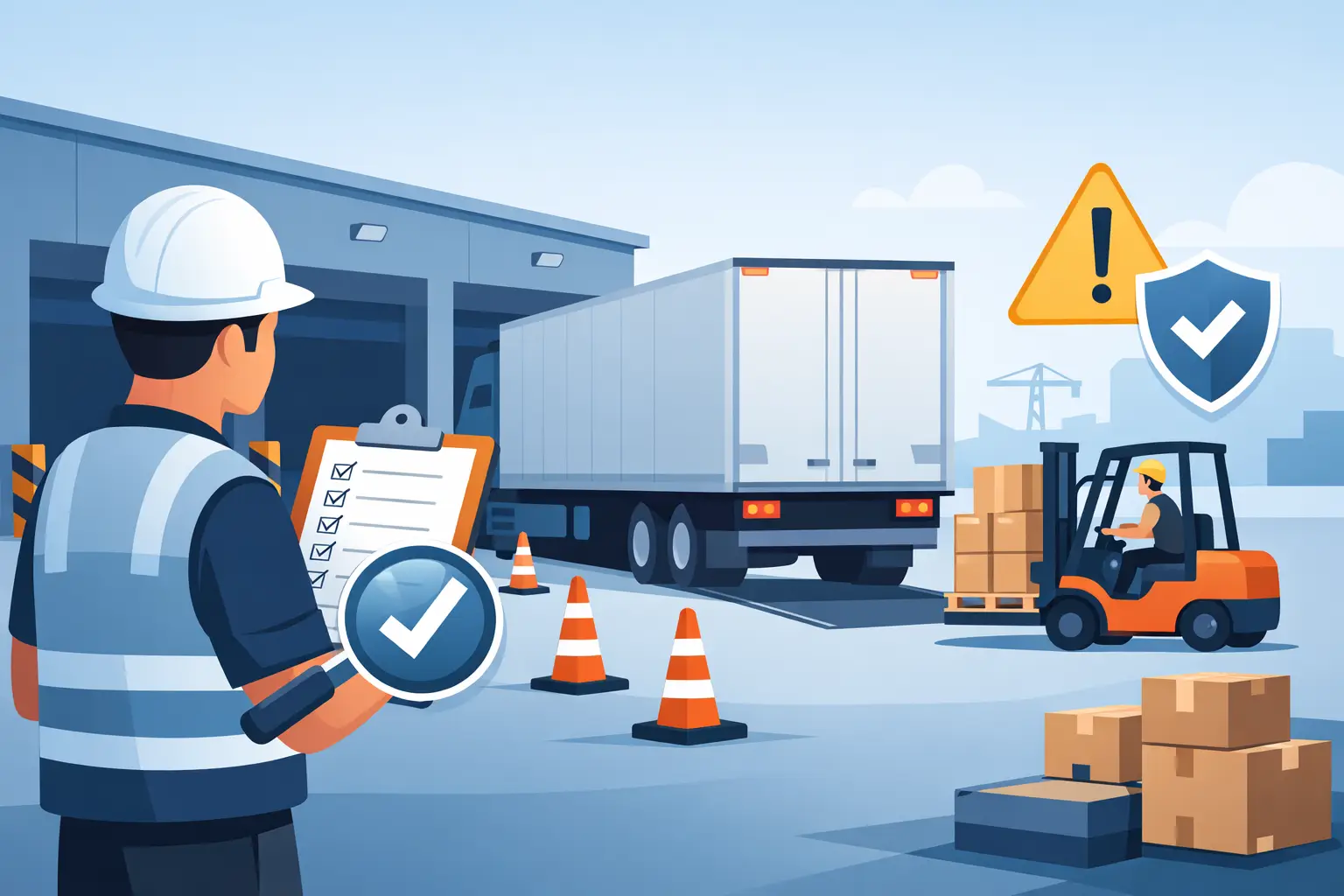
A truck pulls in early. The dock is already under pressure. Forklifts are moving, pedestrians are crossing, the trailer is not fully secured, and one small lapse can turn a routine shift into a serious incident. That is why a loading bay risk assessment guide matters – not as paperwork for a compliance file, but as a practical tool to prevent injuries, equipment damage, and operational disruption.
Loading bays combine vehicle movement, time pressure, uneven surfaces, blind spots, and human error in one confined area. For warehouse managers, EHS leaders, and operations teams, this makes the dock one of the highest-risk zones in the facility. A good assessment does more than identify hazards. It shows where controls are weak, where behaviors are inconsistent, and where technology or layout changes can reduce exposure before an accident happens.
What a loading bay risk assessment should cover
A loading bay risk assessment guide should start with how work actually happens, not how it looks on a procedure sheet. Observe live loading and unloading activity across different shifts. The risks at 8 a.m. may not match the risks during a late delivery, peak outbound window, or bad-weather receiving period.
The assessment should examine vehicle approach, reversing, docking, trailer restraint, door operation, pedestrian movement, forklift travel, load handling, lighting, signage, housekeeping, and emergency response. It should also account for who is exposed. That includes forklift operators, truck drivers, pickers, maintenance staff, contractors, and supervisors passing through the area.
Some facilities focus too narrowly on vehicle impact alone. That is a mistake. Serious loading bay incidents also come from trailer creep, premature truck departure, falls from dock edges, unstable loads, poor communication, and damaged dock equipment that has become normal through repeated use.
Start with the highest-consequence hazards
Not every hazard carries the same level of risk. The first priority should be events with the greatest injury potential and the widest operational impact.
Vehicle movement and pedestrian interface
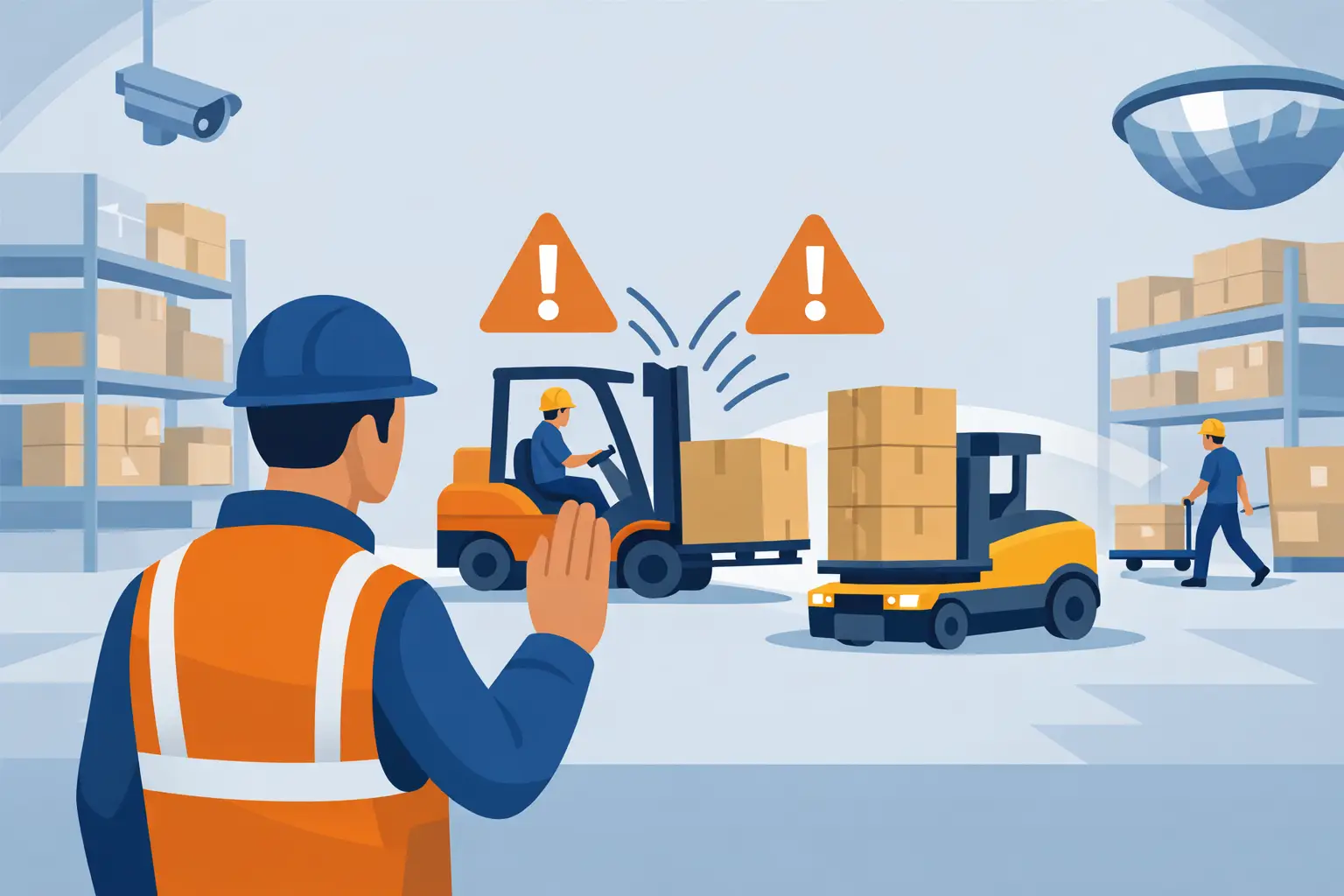
Where trucks, forklifts, and pedestrians share space, the margin for error is small. Reversing vehicles, limited driver visibility, and distracted foot traffic are a dangerous mix. Assess whether pedestrian routes are clearly separated, whether crossing points are controlled, and whether drivers receive consistent marshalling or signaling.
In some sites, painted walkways may be enough if traffic volume is low and sightlines are clear. In busier operations, physical segregation, warning systems, speed controls, and access restrictions are often the safer choice. It depends on the bay layout and traffic intensity.
Unrestrained trailers and unexpected vehicle departure
One of the most severe loading bay risks is a vehicle moving while loading is in progress. Trailer creep can create a gap between trailer and dock. Early departure can send a forklift into open space. A proper assessment should review whether wheel chocks, vehicle restraints, interlocks, and release procedures are reliable and actually used every time.
This is where written rules often fail. If the operation depends on manual steps that can be skipped under pressure, the real risk is higher than the procedure suggests. Engineering controls usually provide more dependable protection than administrative rules alone.
Falls from dock edges and open doors
Open dock edges, damaged dock levelers, and unsecured access points create a clear fall hazard. Review when doors remain open, how bays are protected when not in use, and whether temporary gaps are created during transfer. A missing barrier at the wrong moment can be enough.
Forklift loading conditions inside trailers
A trailer may look stable from outside but still present internal risks. Check floor condition, load distribution, trailer lighting, trailer stand use, and whether the docked vehicle can safely support repeated forklift entry. Wet surfaces, broken boards, and uneven transition plates increase the chance of tip-over or dropped loads.
Assess the conditions that make incidents more likely
A strong loading bay risk assessment guide does not stop at visible hazards. It also examines the conditions that make those hazards more likely to lead to harm.
Lighting is a common example. Poor visibility during early mornings, night shifts, or storm conditions can undermine even well-marked bays. Signage is another. If warning signs are present but ignored because they are too generic or poorly positioned, they are not an effective control.
Housekeeping also matters more than many teams assume. Shrink wrap, broken pallets, oil residue, and misplaced goods create trip hazards and obstruct emergency movement. These are small failures that combine with larger ones.
Training should be reviewed in practical terms. Do operators know the safe sequence for docking, restraining, opening, loading, and releasing? Do truck drivers receive site-specific instructions, or are they expected to guess the process? A trained internal team can still be exposed if third-party drivers are unfamiliar with the site.
Fatigue, production pressure, and staffing gaps should not be ignored. Most dock incidents are not caused by a complete lack of rules. They happen when normal controls weaken under operational stress.
How to rate risk in a useful way
The goal is not to produce a complicated scoring system. The goal is to decide what needs action first.
A practical approach is to rate each hazard by likelihood and severity, then test whether current controls are dependable. A low-frequency event with fatal potential still deserves urgent attention. A high-frequency near miss may signal a control failure even if no one has been injured yet.
This is where incident history helps, but it should not drive the whole process. If you only focus on past accidents, you may miss a serious exposure that has simply been lucky so far. Near misses, damaged barriers, recurring trailer movement, and repeated unsafe shortcuts are all valuable warning signs.
Match controls to the real risk
Once hazards are prioritized, controls should follow the hierarchy of risk reduction. Eliminate the hazard where possible, then reduce exposure through engineering, procedures, and training.
Improve bay design and traffic flow
Layout changes can remove risk at the source. Separate pedestrians from forklift travel. Create controlled truck approach zones. Improve turning space and visibility. Reduce conflicting movement where possible. Even small design changes can remove repeat exposure from every shift.
Strengthen engineering controls
In high-activity docks, physical and automated systems often provide the most reliable protection. Vehicle restraint systems, dock interlocks, traffic lights, impact barriers, pedestrian gates, audible warnings, and visual alerts reduce dependence on perfect human behavior.
This is especially important in facilities managing multiple bays, mixed vehicle types, or contract drivers. Standardized, visible controls help create consistency across changing conditions.
Tighten procedures where human steps remain critical
Some controls will still depend on people, so the process must be simple and repeatable. Define who authorizes docking, who confirms restraint, when loading can begin, and what must happen before departure. If the procedure has too many judgment calls, it will break under pressure.
Maintain equipment before it becomes a hazard
A damaged dock leveler, worn bay light, bent barrier, or faulty door sensor is not just a maintenance issue. It is a safety control that may no longer perform when needed. Inspection frequency should reflect actual bay usage, not just a calendar schedule.
Involve the people who work the dock every day
The best assessments are not written in isolation. Supervisors, forklift operators, and receiving teams usually know where the shortcuts happen, which bays are hardest to manage, and what problems appear during peak periods. Their input can reveal risk patterns that a walk-through alone will miss.
That said, frontline familiarity can also normalize unsafe conditions. If a team has worked around a damaged edge, poor lighting, or inconsistent restraint practice for months, they may stop seeing it as exceptional. A structured assessment helps reset that standard.
For that reason, periodic external review can be valuable, especially after layout changes, incident spikes, or increased throughput. Companies such as SysGuard approach this with both safety and operational continuity in mind, which is often what industrial sites need most – controls that protect people without slowing the facility unnecessarily.
When to review your loading bay risk assessment guide
A loading bay risk assessment guide should not sit untouched for years. Review it after an incident, after a near miss trend, after introducing new trailer types or material handling equipment, and after any dock redesign. Seasonal changes can also affect risk, particularly where rain, heat, or reduced daylight changes working conditions.
If throughput has increased but the dock setup has not changed, that is also a trigger. Rising activity levels often expose weaknesses in traffic control, communication, and equipment capacity long before anyone updates the paperwork.
A safer loading bay is rarely the result of one fix. It comes from disciplined assessment, practical controls, and a willingness to correct issues before they become accepted as part of the job. Every worker deserves to return home safely every day. The dock should be designed and managed with that standard in mind.