A single forklift strike can do more than dent a rack upright. It can weaken load capacity, disrupt picking lanes, damage inventory, and create a hazard that stays hidden until the next pallet is placed. That is why knowing how to protect warehouse racks is not just a maintenance issue. It is a direct safety and business continuity priority.
Rack damage is common in fast-moving facilities. High traffic, tight turning space, rushed replenishment, and inconsistent operator behavior all increase the chance of impact. The right protection strategy does not rely on one product or one rule. It combines layout decisions, physical safeguards, inspections, and operator controls so the rack system can withstand real operating conditions.
How to protect warehouse racks starts with risk mapping
Before adding guards or barriers, identify where impacts are most likely to happen. Not every aisle and every upright carry the same level of exposure. End-of-aisle frames, corner uprights, transfer zones, pick faces near intersections, and areas close to dock approaches usually take the most abuse.
A useful assessment looks at vehicle type, turning radius, travel speed, pallet dimensions, and traffic density. Reach trucks, counterbalance forklifts, and pallet jacks create different impact patterns. The question is not simply where contact has happened before. It is where contact is likely to happen next under normal pressure, peak volume, and shift changes.
This stage matters because overprotecting low-risk areas can waste budget, while underprotecting high-risk zones creates recurring repair costs. In most facilities, the best results come from matching the level of protection to the exposure level rather than applying the same solution everywhere.
Physical protection is your first line of defense
If a rack upright sits in a traffic path, it should not be left exposed. Physical rack protection absorbs or deflects impact before the force reaches the structural frame. That is the most direct way to reduce damage.
Install upright protectors where impacts are frequent
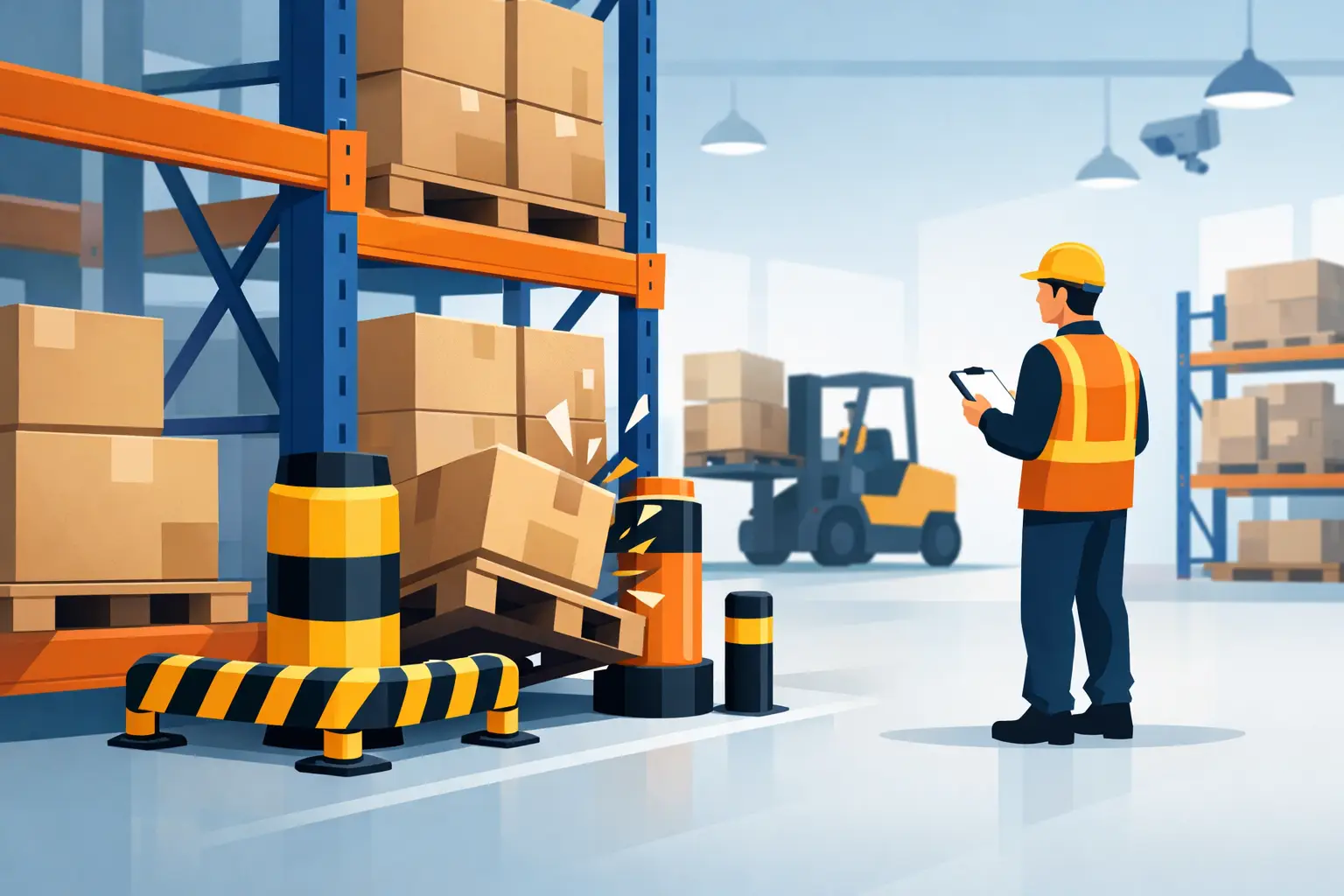
Upright protectors are a practical starting point for lower-level collision risks. Installed at the base of rack legs, they help shield the most vulnerable area from glancing blows and minor vehicle contact. They are especially useful in pick aisles and replenishment zones where forklifts work close to the structure.
That said, upright protectors are not a cure-all. If the facility sees repeated heavy strikes, a small steel guard may not be enough. In those cases, stronger energy-absorbing protection or larger barrier systems are usually the better fit.
Use end-of-aisle barriers for high-exposure zones
End-of-aisle impacts tend to be more severe because vehicles are turning, aligning, or moving between traffic lanes. This is where barrier systems make a major difference. Properly specified barriers create stand-off distance between vehicles and rack frames, helping prevent direct structural contact.
The right barrier depends on vehicle mass, operating speed, and available floor space. Steel options may suit certain environments, while engineered polymer systems can offer controlled energy absorption and lower post-impact repair needs. The trade-off is that the best solution is not always the cheapest upfront. It is the one that reduces repeat incidents and keeps the area operational after minor impacts.
Protect corners, columns, and shared impact zones
Rack safety is affected by the surrounding environment too. Building columns near rack runs, pedestrian crossings, battery charging areas, and dock approach lanes often create mixed traffic patterns. When visibility is reduced or movements overlap, vehicle strikes become more likely.
In these areas, rack protection should be part of a wider impact management plan that may include column guards, pedestrian barriers, and visual separation. Protecting only the rack while leaving the surrounding conflict points unmanaged usually leaves the root problem in place.
Layout and traffic flow matter more than many teams expect
Some rack damage is caused by weak protection, but a lot of it starts with poor layout. If aisle widths are too tight for the equipment in use, or if pallets overhang into travel space, operators are being asked to perform with very little margin for error.
Review whether your current layout matches your actual fleet and load profile. A facility may have been designed for one truck type and later shifted to another with different maneuvering needs. Seasonal overflow can create temporary storage in areas that reduce visibility or narrow turning space. These changes often happen gradually, which is why they are missed.
If you want to reduce rack strikes, look closely at aisle clearances, travel routes, staging behavior, and line-of-sight at intersections. Marked one-way systems, designated pedestrian zones, and clearly separated staging areas can reduce decision pressure on operators. Better flow is not just an efficiency gain. It is a structural protection measure.
Inspections prevent small damage from becoming a larger failure
Even well-protected racks need regular inspection. A damaged upright, twisted brace, or loosened anchor can compromise the load path of the whole bay. The danger is that damage often becomes normalized in busy operations. Teams see a bent leg, assume it is minor, and keep loading.
A disciplined inspection program should include routine visual checks by trained site personnel and periodic expert assessment for structural concerns. Damage classification is important. Not every mark requires immediate replacement, but deformation in critical members should never be treated casually.
Documentation also matters. If the same rack location is hit repeatedly, that points to an operational issue, not bad luck. Trend data helps identify whether the real problem is layout, visibility, operator training, or inadequate protection design.
Training and accountability reduce repeat impact events
Warehouse racks are often damaged by experienced operators, not just new ones. Familiarity can lead to shortcuts, faster travel, and assumptions about space. Under production pressure, even skilled teams make contact when controls are weak.
Operator training should go beyond equipment certification. It should address site-specific rack hazards, aisle rules, speed expectations, and what to do when contact occurs. One common failure is unreported impact. If operators believe reporting a strike will lead only to blame, minor hits stay hidden and damaged racks stay in service.
A better approach is clear accountability with a strong reporting culture. Make it easy to report contact, inspect affected areas quickly, and take action without delay. Safety improves when reporting is treated as hazard control, not punishment.
Technology can strengthen rack protection
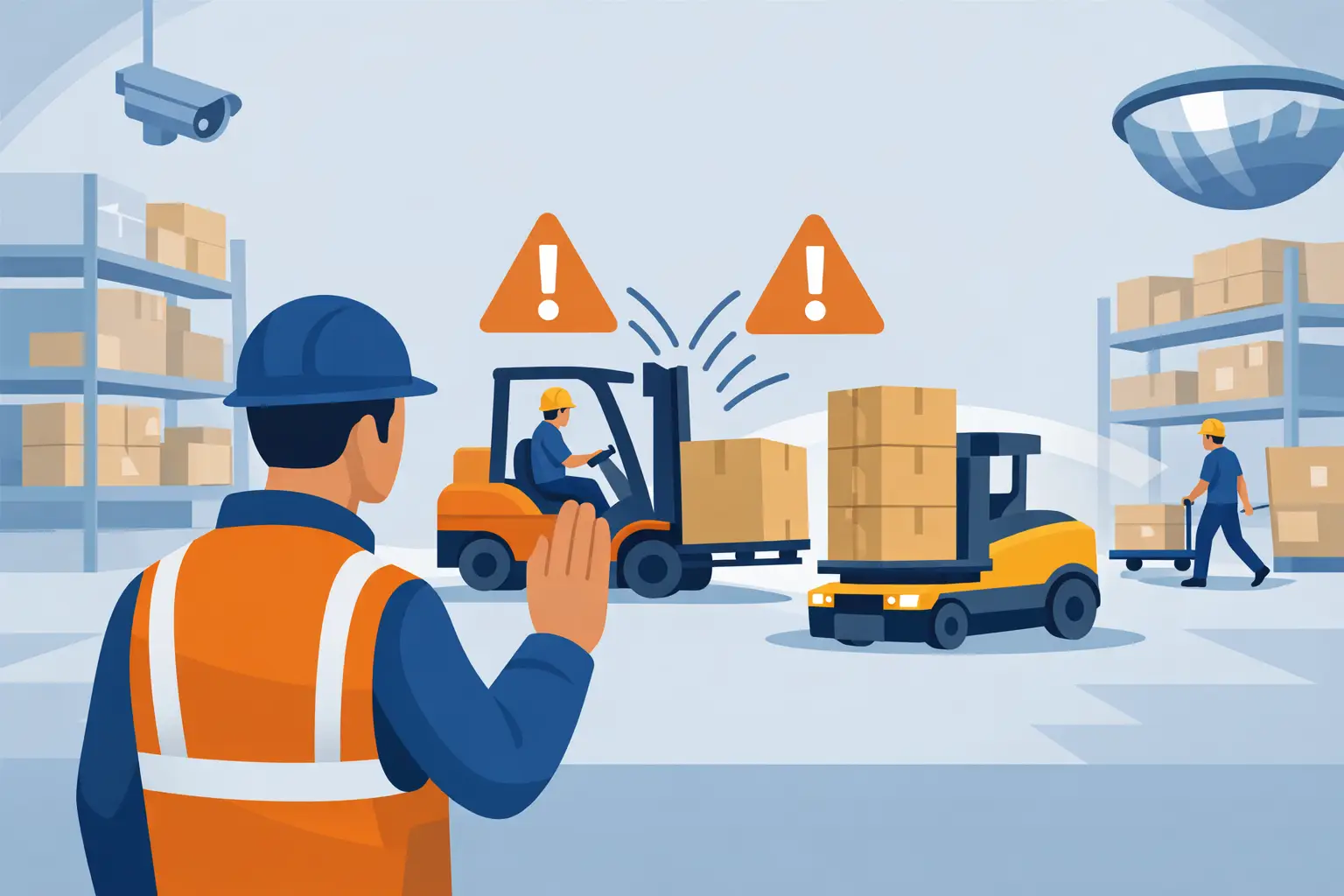
In higher-risk facilities, physical barriers and training may need support from active warning systems. Audible and visual alerts at intersections, pedestrian crossings, and blind corners can reduce the chance of vehicle conflict before a strike happens. In some environments, sensor-based systems and Vision AI tools can help monitor movement patterns, identify high-risk behavior, and support corrective action.
Technology works best when it solves a defined problem. If repeated strikes happen at one corner because visibility is poor, targeted warnings may help. If damage is widespread across many aisles, the issue is more likely to be traffic design or operator behavior. The solution should match the failure mode.
This is where a consultative safety approach is valuable. The strongest warehouse protection plans combine engineering judgment, operational understanding, and practical implementation. That is the difference between installing products and actually reducing risk.
How to protect warehouse racks for the long term
Long-term protection is about consistency. Facilities that see the best results usually do four things well. They protect high-risk rack locations with the right barriers and guards, maintain clear traffic routes, inspect damage before it escalates, and treat every impact as a signal to improve the system.
There is no single product that can compensate for poor layout or weak safety discipline. At the same time, training alone is not enough if exposed uprights sit directly in forklift paths. The most effective strategy is layered and realistic. It assumes impacts can happen, then puts the right controls in place to prevent a minor mistake from becoming a serious incident.
Every worker deserves to return home safely every day. Protecting warehouse racks supports that goal in a very practical way. It protects people standing nearby, preserves inventory and infrastructure, and helps the operation keep moving when conditions are at their busiest. When rack protection is planned properly, safety and performance improve together.