A forklift clips a rack upright, a pedestrian steps into a blind corner, or a trailer shifts unexpectedly at the dock. These are not isolated incidents. They are common failure points in active facilities, and they show exactly why leaders keep asking how to reduce warehouse collisions without slowing operations to a crawl.
The right answer is rarely a single product or policy. Collisions happen when traffic design, visibility, human behavior, and equipment protection are out of sync. If you want meaningful risk reduction, you need to treat warehouse movement as a system – one that protects people first, while also protecting uptime, inventory, and infrastructure.
How to reduce warehouse collisions starts with traffic design
Most warehouses inherit traffic patterns over time. A pallet staging area expands, a picking route changes, seasonal inventory builds up, and suddenly pedestrians and lift trucks are sharing space that was never designed for mixed movement. That is where collision risk grows.
The first step is to study how vehicles, people, and loads actually move through the site. Not how the floor plan says they should move, but what happens during real shifts, peak periods, and loading windows. Look closely at intersections, cross aisles, dock approaches, battery charging zones, and high-turn storage areas. Near misses often cluster in the same places long before a serious accident occurs.
Once those patterns are clear, traffic rules need to become physical, visible, and enforceable. Marked walkways help, but paint alone does not stop a forklift. Separation matters more than signage. Where pedestrians and vehicles operate in close proximity, permanent barriers, guarded crossings, and defined vehicle lanes create a much stronger layer of control than administrative rules alone.
This is also where trade-offs matter. A tighter traffic route may improve speed but increase blind spots. A wider shared aisle may feel safer but encourage mixed use. Good traffic design balances efficiency with margin for error, because in a live warehouse, someone will eventually make a mistake.
Visibility is a major factor in how to reduce warehouse collisions
Many warehouse collisions happen because one party simply does not see the other in time. Blind corners, tall racking, stacked pallets, trailer obstructions, and variable lighting all reduce reaction time. Relying on mirrors and horn use alone is rarely enough in fast-moving environments.
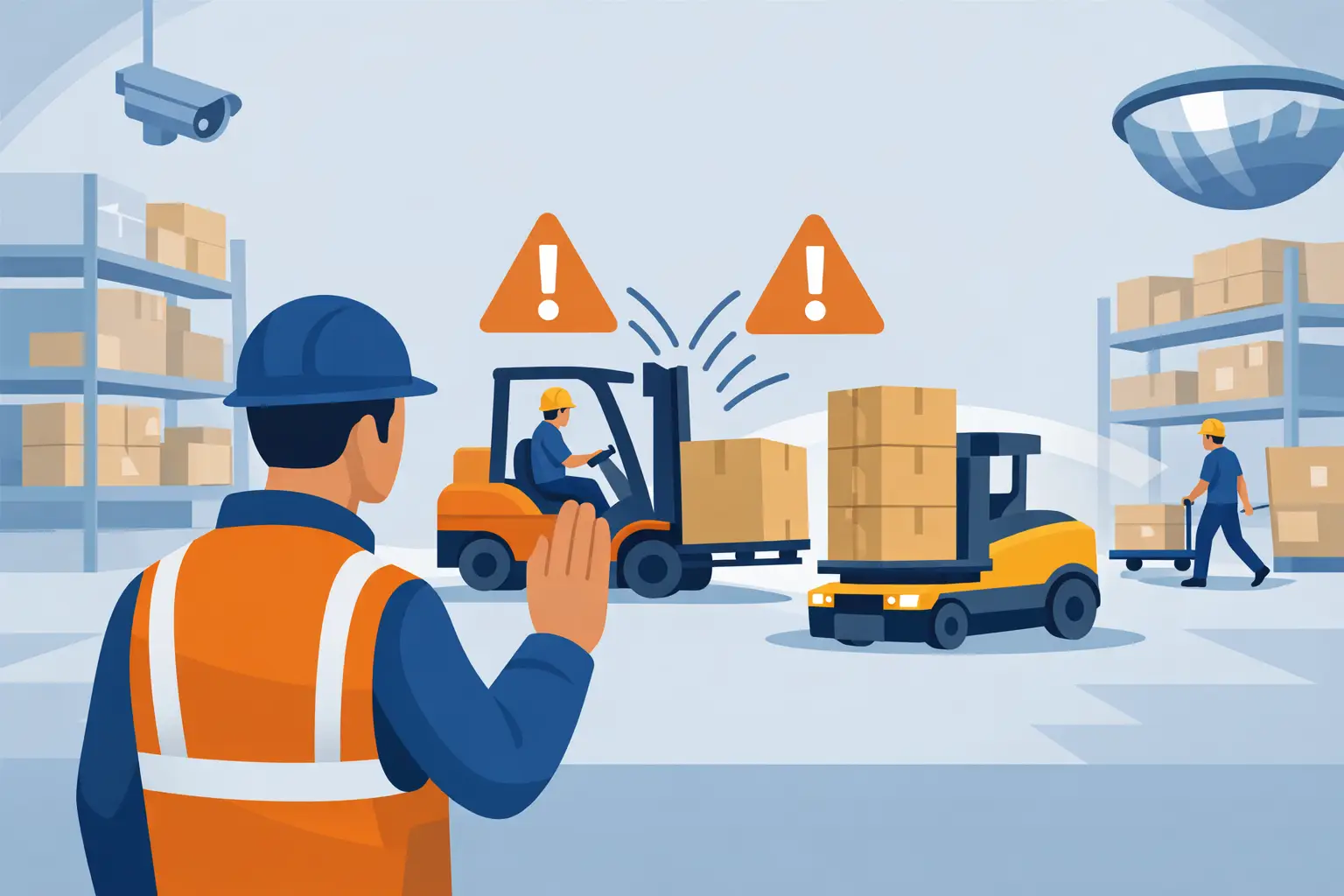
A better approach combines line-of-sight improvement with active warning systems. Intersections should be cleared of visual clutter wherever possible. Rack ends and aisle entries should remain visible. Lighting should support safe movement, not just general task performance. Where corners remain blind by design, visual alerts and audible warnings can give workers the extra seconds they need to stop.
Technology can add another layer of protection. Motion-activated warning systems, forklift proximity alerts, and AI-enabled detection systems can identify movement conflict before contact occurs. These systems are especially valuable in facilities with frequent crossing traffic, multilingual workforces, or operations where noise and pace reduce situational awareness.
That said, technology works best when the environment is disciplined. If operators are exposed to constant false alarms or poorly placed alerts, response quality drops. The goal is targeted warning in genuinely high-risk zones, not a warehouse full of signals that people learn to ignore.
Separate people from moving equipment wherever possible
If pedestrians and forklifts share the same operating space, collision prevention becomes much harder. Training helps, but human attention is inconsistent, especially during long shifts, end-of-day pressure, or peak throughput periods.
Physical separation remains one of the strongest controls available. In practical terms, that may mean installing barriers along walkways, protecting workstation edges, shielding rack ends, and creating designated crossing points instead of allowing ad hoc foot traffic through travel lanes. At loading bays, it may also mean keeping nonessential personnel out of dock areas during active operations.
This is where many facilities underinvest. They rely on procedural discipline because it appears cheaper upfront. But a single vehicle strike can lead to injury, rack damage, inventory loss, investigation time, and operational disruption. In that context, engineered separation is often one of the most cost-effective safety upgrades a site can make.
For mixed environments, consider where interaction is truly necessary and where it can be designed out. If pickers need repeated access across a forklift lane, the problem may not be worker behavior. It may be layout design.
Operator behavior matters, but systems matter more
When a collision happens, the first instinct is often to retrain the driver. Sometimes that is necessary. Operators need clear speed rules, right-of-way discipline, pre-shift checks, and strong expectations around cornering, reversing, and load handling.
But blaming behavior alone misses the broader issue. If multiple operators are making the same mistake in the same area, the system is likely contributing to the event. Poor aisle width, obstructed views, weak signage, floor congestion, and unrealistic productivity pressure can all increase unsafe driving patterns.
Effective operator control combines accountability with environmental support. Forklift safety systems can help monitor impacts, speed, and high-risk behavior. Access control can ensure only authorized and qualified personnel operate equipment. Alerts can warn drivers when pedestrians or other vehicles are nearby. These controls do not replace good operators. They reinforce safe decisions when conditions become difficult.
A stronger safety culture also depends on supervisors responding to near misses with seriousness. If workers report dangerous intersections or repeated dock conflicts and nothing changes, reporting stops. Then the next warning may be an injury.
Dock areas need their own collision prevention strategy
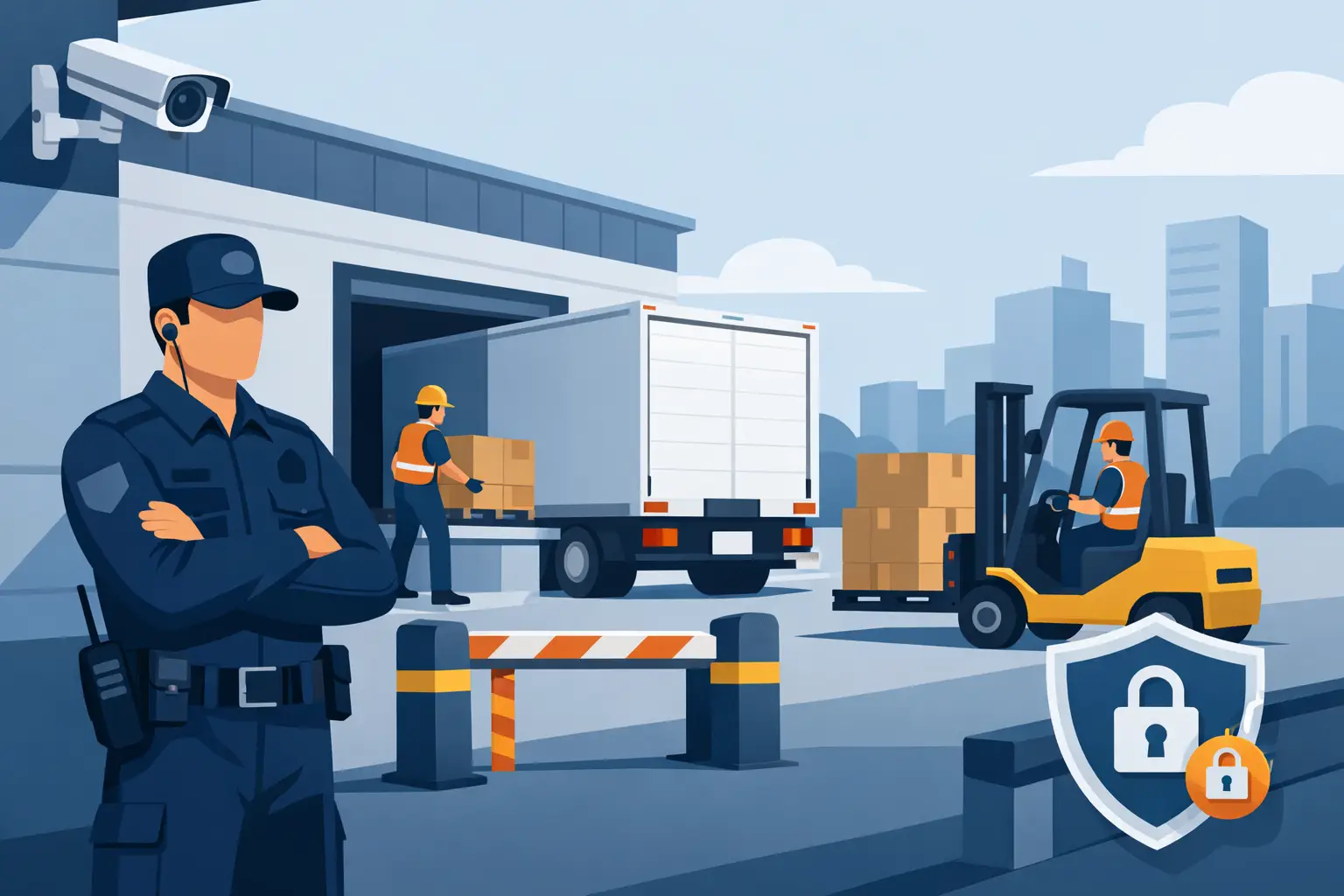
Loading bays concentrate multiple hazards in a small space. Forklifts, trailers, pedestrians, dock equipment, and time pressure all converge there. That is why many serious incidents happen at or near the dock, not deep inside storage aisles.
To reduce collisions in these zones, trailer movement must be controlled before loading begins. Vehicle restraint systems, clear dock status communication, and visible loading indicators help prevent premature departure and unexpected trailer shift. Inside the bay, impact-resistant barriers, wheel guides, and dock safety equipment protect both structure and people from vehicle contact.
Dock approaches should also be reviewed for congestion. If staging spills into travel lanes or drivers must maneuver around temporary obstructions, the risk rises quickly. Good dock safety is not just about the edge of the building. It includes the approach, the trailer interface, and the traffic logic around every active door.
For operations with heavy throughput, this is one area where standardized engineering controls typically outperform policy-based controls. Busy dock teams need systems that work under pressure.
Use data to target the real risk
The facilities that make the biggest gains in collision prevention do not guess. They look at impact history, maintenance records, damaged rack locations, near-miss reports, and shift-level incident patterns. That data often shows where risk is concentrated and where investment will produce the fastest return.
A rack protector repeatedly hit in the same aisle is not just a maintenance issue. It is a traffic signal. A dock door with frequent near misses may need better restraint, warning, or staging control. A pedestrian crossing that workers avoid may indicate poor placement or low trust in vehicle compliance.
This is where a consultative approach becomes valuable. Many sites know they have risk, but they need help translating patterns into practical interventions. A strong safety partner can assess the environment, identify weak points, and recommend a combination of barriers, alerts, equipment safeguards, and process changes that fit the site rather than forcing a generic solution.
At SysGuard, that kind of approach is central to warehouse safety improvement. The goal is not to add technology for its own sake. It is to reduce exposure in the areas where people, equipment, and infrastructure are most vulnerable.
Build layers, not single-point fixes
If you are serious about how to reduce warehouse collisions, think in layers. Start with layout and traffic flow. Add physical separation where interaction creates risk. Improve visibility and warning at known conflict points. Strengthen forklift controls and operator discipline. Protect docks as a distinct hazard zone. Then track what changes and what does not.
No facility eliminates risk with one intervention. Conditions change, inventory profiles shift, and throughput pressure comes and goes. The sites that stay safer over time are the ones that treat collision prevention as an operating system rather than a one-time project.
Every warehouse is different. A narrow-aisle distribution center has different failure points than a manufacturing plant or a high-volume logistics hub. But the principle stays the same: when safety controls are engineered into movement, collisions become less likely, less severe, and less disruptive.
Every worker deserves to return home safely every day. The practical path to that outcome starts with seeing collisions not as routine warehouse wear and tear, but as preventable events that good design, disciplined controls, and the right safety systems can stop.